



Choosing storage bins for workshops shouldn't be an afterthought. Instead, it's a valuable opportunity to improve productivity, reduce waste and streamline inventory control.
Want to learn more? In this guide, we explain what to look for in a good storage bin setup and how smart techniques, like bin labelling and colour coding, can boost warehouse organisation.
What to look for in a good storage bin setup
Whether you're a workshop manager, industrial buyer, electrician or mechanic, a good storage bin setup can help you make the most of your space. Not sure where to start? Consider the following:
Stackability
Stackable bins are the perfect solution for compact workshops with minimal floor space. The interlocking units sit neatly on top of one another without slipping – but are still easy to disconnect and rebuild in customised layouts.
Visibility: Clear vs coloured
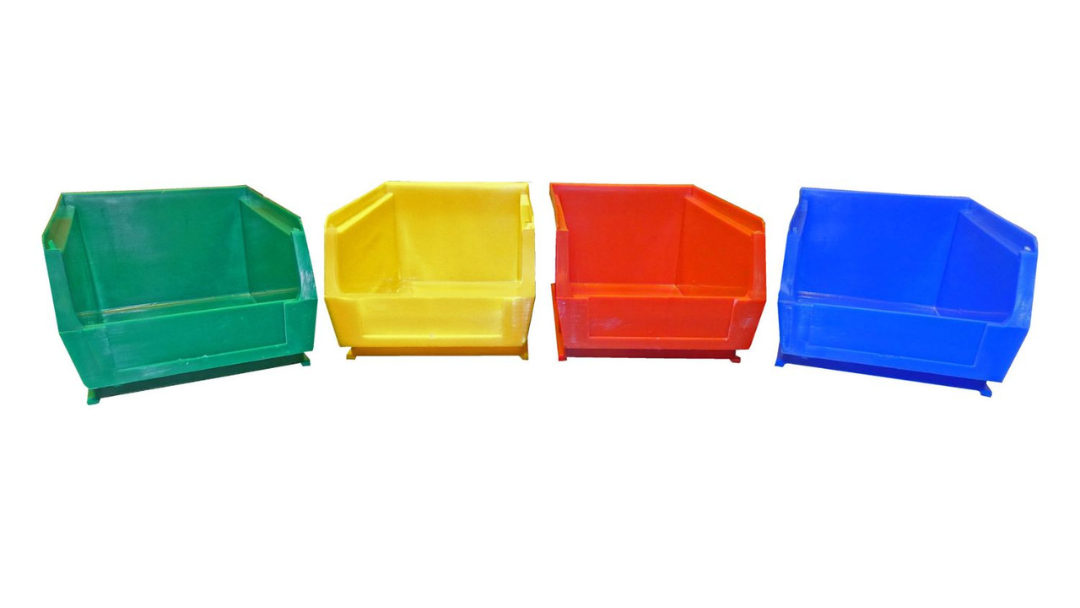
A question we get asked a lot is: What is better, clear or coloured storage bins? Ultimately, it depends on your workshop. Clear bins make it easy to identify contents at a glance, while coloured bins are useful for categorising products, e.g. red for electrical and purple for plumbing. The best setups combine both.
Labelling surface or slots
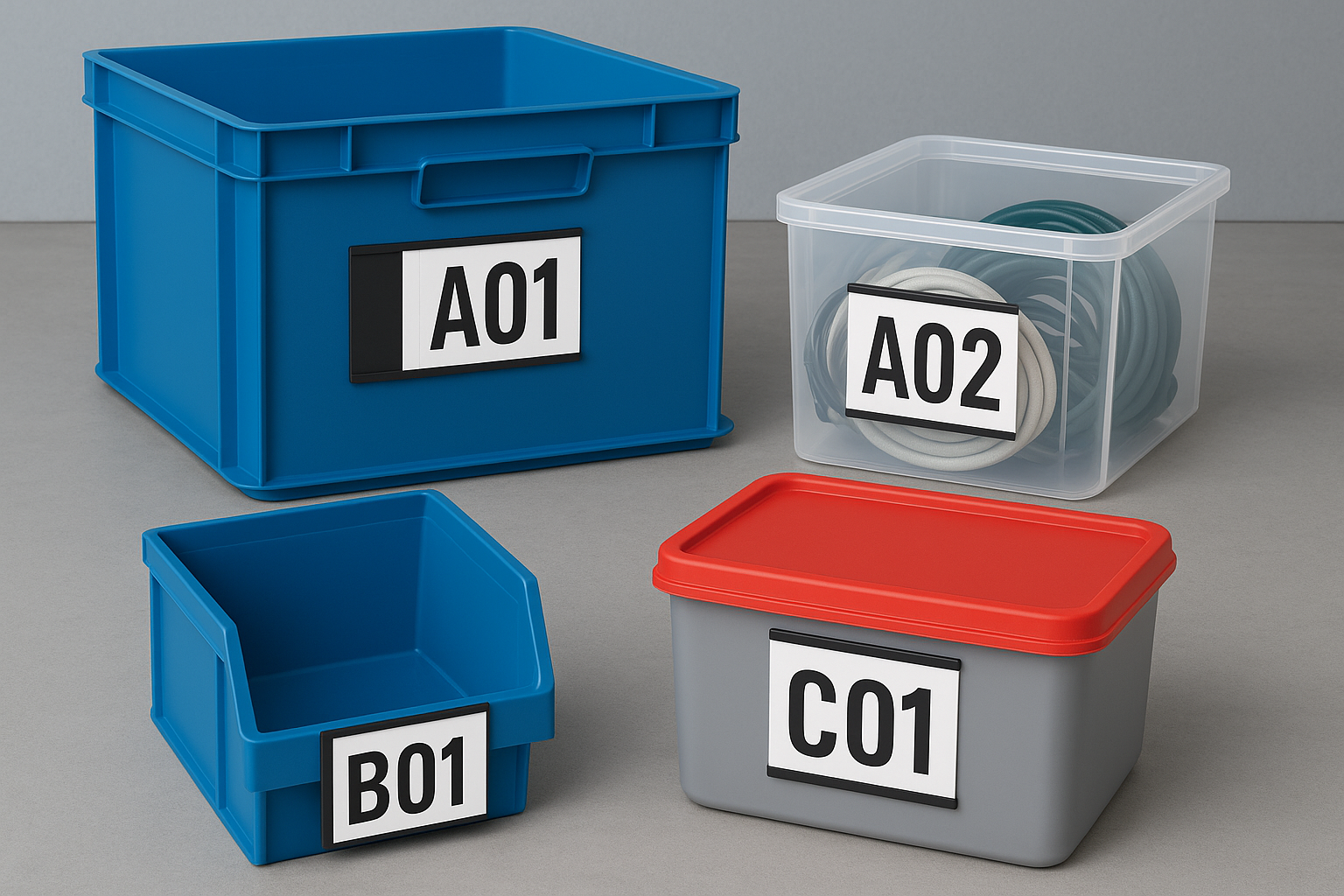
Quick picking and restocking often depend on clear bin labelling, meaning it's important to choose designs with flat fronts or built-in label slots. Labelling is especially useful if you opt for non-clear storage containers.
Material strength and load rating
Finally, do you need heavy-duty pallets and bulk storage containers or lightweight trays and crates for small parts? Always check the load rating before storing products because you don't want the material to crack or warp under pressure.
Matching bin types to applications
Not all storage bins for workshops are the same, so it’s worth doing a bit of research before kitting out your space. To help, here's a breakdown of the most common bin types and their applications:
- Storage boxes with lids – Suitable for slow-moving products or items that don't get used every day. Useful for protecting electrical equipment from dust and moisture.
- Stackable bins – Provide easy access to high-demand items, such as gloves, tape and PPE. Especially useful on shelving units or racking systems in busy workshops.
- Storage trays and crates – Often used as parts storage containers for small items, including screws, washers and fixings. Easy to transport in mobile setups that need wheeling between areas.
- Pallet and bulk containers – Offer high-capacity storage for large products and materials. Best suited for warehouses, trade counters or stockrooms where items are delivered in bulk.
Related reading: Industry Spotlight: Cable Ties & Tape for Manufacturing
Organising your workspace with bins
Once you’ve chosen the right types of storage bins, it’s time to think about how to organise them effectively. Here are three simple tips to get you started:
Colour coding by category
We've already touched on this, but colour coding storage bins is the easiest way to categorise products. For example, you might use:
- Red for electrical parts
- Purple for plumping supplies
- Blue for automotive cables
- Yellow for PPE and safety gear
Related reading: PPE & Disposable Gloves Buyers guides
Standardising bin sizes
For the most part, it's a good idea to have the same-sized storage bins to maximise space and prevent containers from being stacked unevenly or unsafely.
Shelving vs free stacking
Most environments benefit from a combination of shelving and free stacking. Shelving is fixed and keeps bins neatly lined and accessible, while free stacking offers flexibility for mobile workspaces. Remember, heavier containers should always go at the bottom.
Find quality storage bins for workshops
Planning your layout and investing in long-term bin organisation isn't a waste of time – it's a low-effort, high-reward way to boost productivity and cut waste.
The GTSE storage container range has everything you need to streamline your operations, from stackable bins to bulk containers. For more advice, contact our team today.