





Burying Cables Safely: The Ultimate Guide to Underground Conduit
Protecting power lines in the ground is a high-stakes job. Learn how to ensure compliance, safety, and durability for all your outdoor electrical runs.
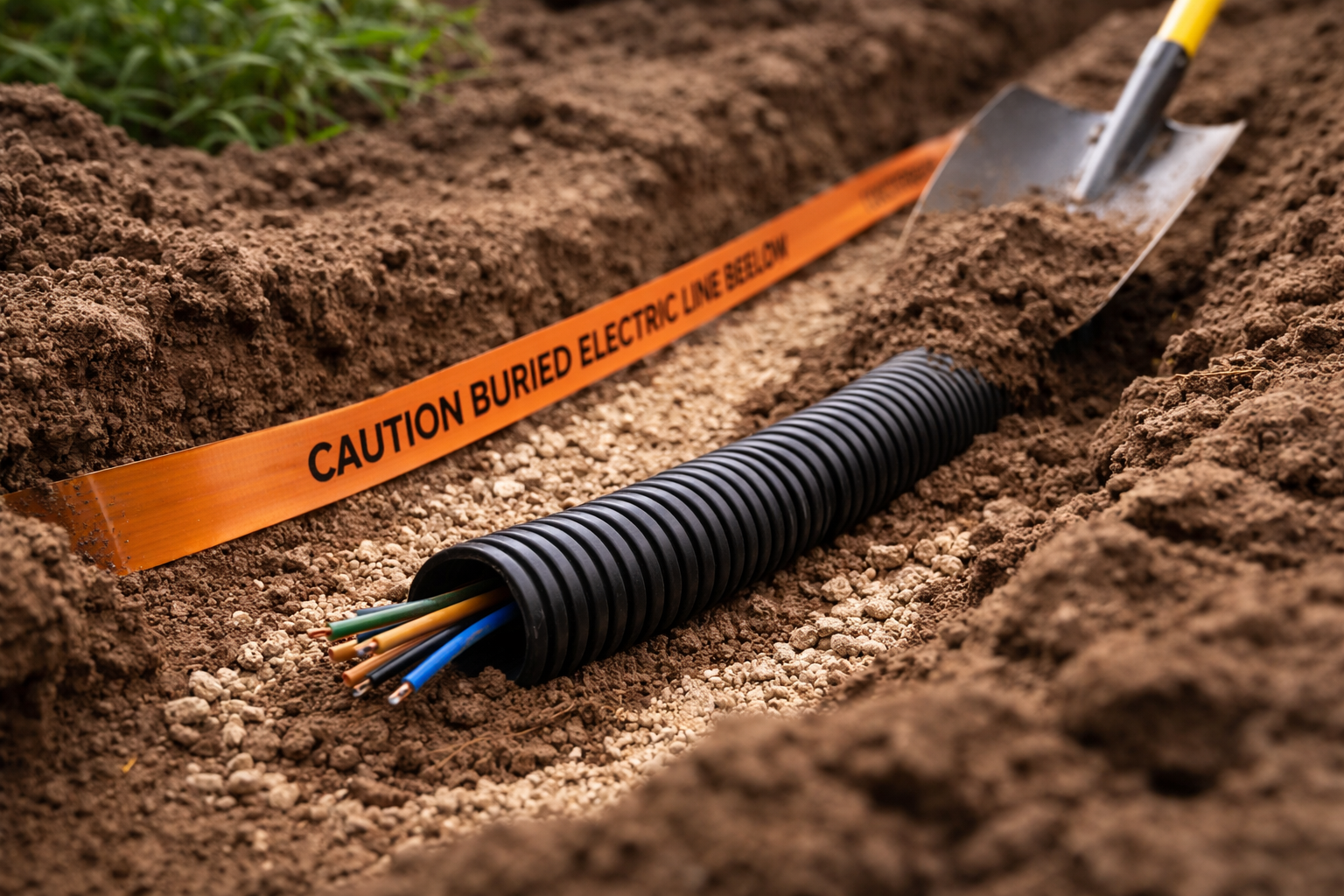
1️⃣ Why You Shouldn't Just Bury Cable Directly
It might be tempting to lay standard cable directly in the soil to save time, but this is a false economy. The ground is a hostile environment, and unprotected cables are vulnerable to:
- ⚠️ Mechanical Damage: Garden forks, spades, and vehicle weight can crush or sever cables instantly.
- Water Ingress: Soil is often waterlogged. Unless a cable is specifically rated for submersion, moisture will eventually penetrate the sheath.
- Rodent Damage: Rats and moles are known to chew through cable sheathing underground.
- Future Access: If a direct-buried cable fails, you have to dig up the entire garden to fix it. With conduit, you can often pull a new cable through without lifting a shovel.
The Bottom Line: View conduit as essential protection, not an optional extra. It ensures compliance, safety, and longevity.
2️⃣ UK Regulations & Best Practice (BS 7671)
The IET Wiring Regulations (BS 7671) state that cables buried in the ground must be buried at a depth where they are unlikely to be damaged by any reasonably foreseeable disturbance of the ground.
Minimum Burial Depth Guidance
| Location | Min. Depth | Why? |
|---|---|---|
| Private Gardens / Lawns | 450mm - 600mm | To avoid garden forks and aeration spikes. |
| Driveways / Under Paths | 600mm+ | To protect against vehicle weight and compression. |
| Agricultural Land | 600mm - 1000mm | To avoid deep ploughing machinery. |
⚡ Key BS 7671 Considerations
- Mechanical Protection: Cables must be protected against impact. This is why SWA (Steel Wire Armoured) cable or heavy-duty conduit is standard.
- Warning Tape: You must install a visual marker (yellow tape) above the cable to warn future diggers.
- RCD Protection: Almost all external circuits will require RCD (Residual Current Device) protection at the source to prevent electric shock.
3️⃣ Twinwall Duct: The Heavy Lifter
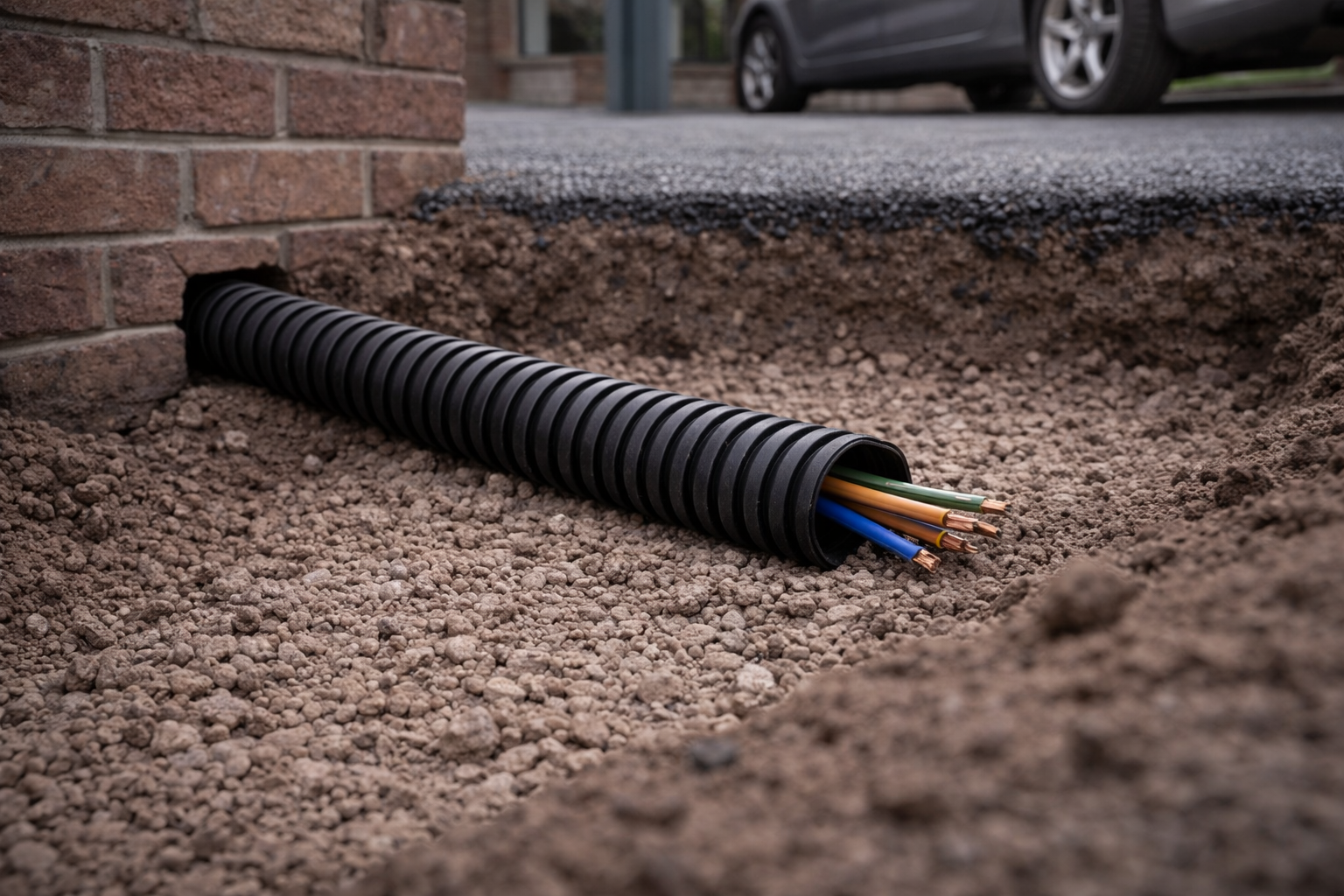
For serious protection, especially under driveways, Twinwall Ducting is the professional standard. It features a corrugated outer wall for high crush resistance and a smooth inner wall for easy cable pulling.
- High Crush Resistance: Can withstand significant weight (like cars on a driveway) without collapsing.
- Ideal for EV Chargers: The go-to choice for running heavy cables from a house to a driveway charging point.
- Color Coding: Often black (electricity) or green (cctv/comms), but always check local utility requirements.
4️⃣ Step-by-Step: How to Bury Cables Properly
Follow this masterclass for a safe, long-lasting installation:
- Plan the Route: Mark out the shortest, safest route. Avoid areas likely to be dug up later (like flower beds).
- Dig the Trench: Excavate to the correct depth (see table above). Keep the trench bottom flat.
- Prepare the Base: Ensure the bottom of the trench is flat and completely free of sharp rocks or debris that could puncture the conduit.
- Install Conduit: Lay your Twinwall or heavy-duty conduit. Keep it straight to make pulling cables easier.
- Pull Cable: Use a draw rope to pull your SWA or power cable through the duct.
- Soft Fill & Warning Tape: Cover the conduit with stone-free soil to protect it, then lay yellow warning tape along the entire length (about 150mm below the surface).
- Backfill & Compact: Fill the rest of the trench with soil, compacting it in layers to prevent sinking later.
Practical Tips
- Avoid Sharp Bends: Underground cables are stiff. Keep bends sweeping and gentle.
- Use Draw Rope: Always leave a spare draw rope in the conduit for future upgrades.
- Seal Ends: Use foam or end caps to stop water and rodents entering the conduit.
5️⃣ Common Mistakes to Avoid
We see these errors all the time. Don't let them happen to your project:
- ❌ Burying Too Shallow: A "lazy" 200mm trench will almost certainly be hit by a shovel eventually.
- ❌ Poor Bedding: Sharp stones in the soil will pierce conduit over time as the ground settles. Ensure the base is clear.
- ❌ Forgetting Warning Tape: Without tape, the next person to dig has no warning before they hit live voltage.
- ❌ No Access Points: For long runs, install inspection chambers so you can access the cable without digging.
- ❌ Mixing Fittings: Ensure your couplers and seals match the specific brand/type of conduit (e.g., Twinwall fittings for Twinwall pipe).
6️⃣ IP Ratings & Waterproofing
Underground is a wet place. Your entire system relies on keeping that moisture out of your connections.
Why IP Rating Matters: Ingress Protection (IP) ratings tell you how waterproof an item is. For underground use, aim for IP67 (immersion proof) or high-quality IP66 (heavy rain/jet proof) for surface terminators.
Critical Seals:
- Cable Entries: Wherever a cable enters a building or box, it must be sealed with a proper waterproof gland or sealant.
- Junction Boxes: If you must have a join underground (avoid if possible!), use a resin-filled joint kit. Standard boxes will fill with water.
Ready to Dig?
Ensure your installation is safe, compliant, and built to last with our heavy-duty underground range.
View UNDERGROUND ConduiT