





Stainless Steel Cable Tie Applications: A Complete Industry Guide
Stainless steel cable ties are the go-to fastening solution when standard nylon ties simply won't cut it. Built to withstand extreme temperatures, corrosive environments, and heavy-duty applications, they're trusted across industries where reliability isn't optional — it's essential.
This guide covers the most common applications for stainless steel cable ties, helping you choose the right product for your specific requirements. Whether you're working on a boat, under a bonnet, or in a chemical plant, we've got you covered.
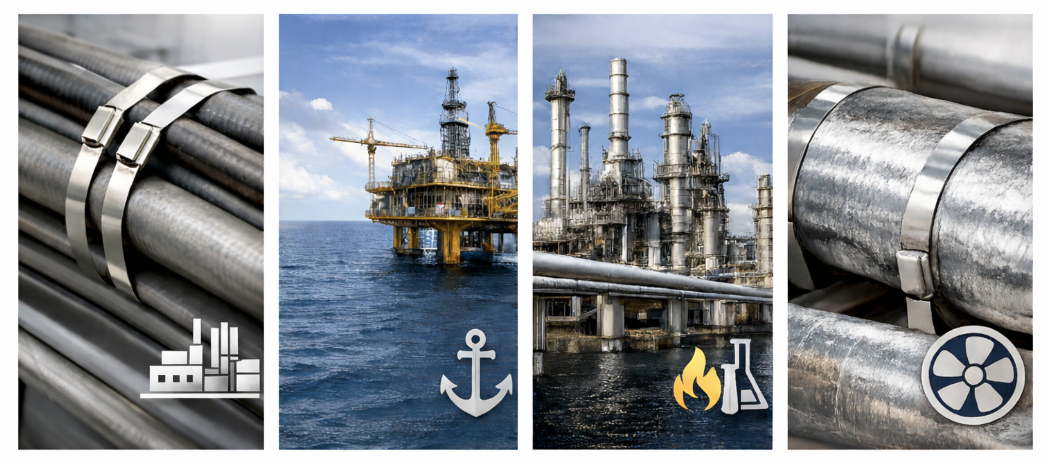
Marine & Coastal Applications
Saltwater and coastal air rapidly corrode standard fixings. Stainless steel cable ties — particularly 316 grade — offer superior resistance to salt spray, humidity, and marine atmospheres.
Common uses:
- Securing wiring on boats and marine vessels
- Fastening cables on docks, piers, and harbours
- Bundling lines and rigging
- Coastal infrastructure and wind farms
Automotive & Exhaust Systems
Under-bonnet temperatures can exceed 200°C, and exhaust systems run even hotter. Nylon ties melt. Stainless steel ties don't.
Common uses:
- Securing exhaust heat shields and wrapping
- Engine bay cable management
- Radiator hose and pipe securing
- Classic car and motorsport applications
Solar Panel & Renewable Energy Installations
Solar installations face decades of UV exposure, temperature cycling, and weather extremes. Stainless steel ties provide permanent, maintenance-free fastening that outlasts the panels themselves.
Common uses:
- Securing DC cabling on panel frames
- Cable management along mounting rails
- Inverter and junction box cable runs
- Ground-mount and rooftop arrays
HVAC & Ductwork
Heating, ventilation, and air conditioning systems require fasteners that handle temperature fluctuations and don't degrade over time in confined spaces.
Common uses:
- Securing insulation to ductwork
- Bundling sensor and control cables
- Fastening flexible ducting
- Industrial ventilation systems
Chemical Plants & Harsh Environments
Chemical processing, oil & gas, and industrial facilities expose fixings to corrosive atmospheres, acids, and extreme conditions. 316 stainless steel resists a wide range of chemicals that would destroy lesser materials.
Common uses:
- Securing cables in refineries and processing plants
- Pipe and cable bundling in corrosive atmospheres
- Offshore oil and gas platforms
- Water treatment facilities
Why 316 Grade Matters Here
The 2% molybdenum content in 316 stainless steel provides chemical resistance that 304 grade simply can't match. For chloride and acid environments, 316 is essential — not optional.
Food Manufacturing & Hygiene-Critical Environments
Food production facilities require metal detectable cable ties to meet HACCP and food safety regulations. If a tie breaks, it can be detected and removed before contaminating products.
Common uses:
- Securing cables in food processing lines
- Pharmaceutical manufacturing
- Cleanroom environments
- Any facility requiring HACCP compliance
Outdoor Signage & Street Furniture
Councils, contractors, and facilities managers need fixings that last for years without maintenance. Stainless steel ties secure signs, barriers, and street furniture permanently.
Common uses:
- Traffic and street signs
- Temporary event signage
- Barrier and fencing attachments
- Outdoor lighting and CCTV cables
Quick Selection Guide
| Application | Recommended Type | Why |
|---|---|---|
| Marine / Coastal | 316 grade, PVC coated | Maximum corrosion resistance + cable protection |
| Exhaust / High heat | Uncoated stainless steel | Handles extreme temperatures |
| Solar installations | 316 grade, coated | UV stable, protects cable insulation |
| Chemical / Industrial | 316 grade | Chemical and chloride resistance |
| Food manufacturing | Metal detectable | HACCP compliance |
| Signage / Outdoor | PVC coated | Prevents surface damage, weatherproof |
Why Choose Stainless Steel Over Nylon?
- Temperature range: -80°C to +538°C vs nylon's -40°C to +85°C
- UV resistance: Won't degrade in sunlight
- Chemical resistance: Withstands oils, fuels, and corrosive substances
- Strength: Higher tensile strength for heavy-duty bundling
- Longevity: Decades of service life in harsh conditions
"It's really a decision of how harsh the environment that the ties will be used in is. If there's going to be chemical damage, then saving the money on purchasing 304 ties might mean that the tie needs to be replaced sooner. Most DIY and everyday securing solutions, the 304 ties will do a great job as these are still stainless steel."
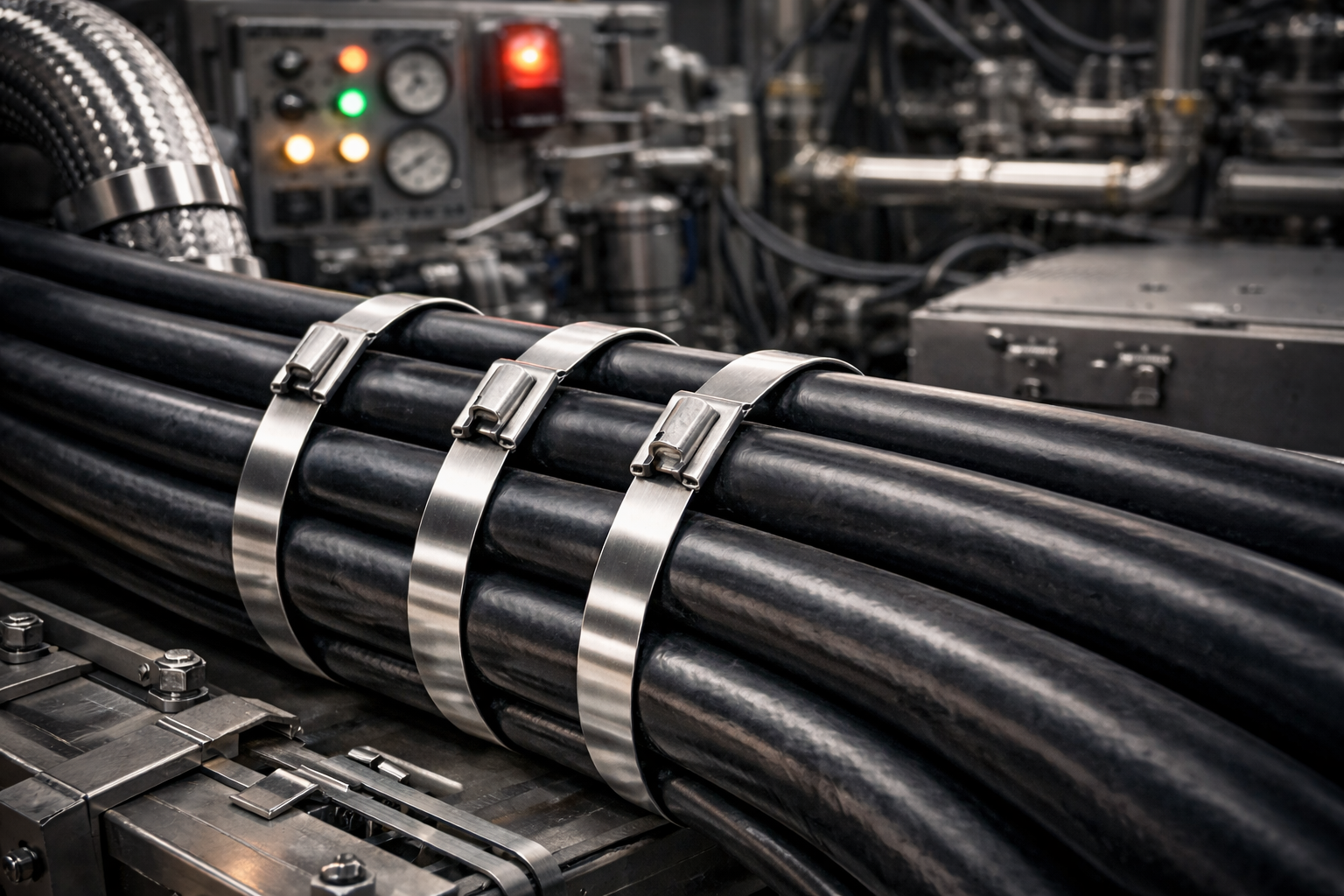
For applications where failure isn't an option, stainless steel cable ties are the professional choice.
Ready to order?
Browse our complete range of stainless steel cable ties — uncoated, PVC coated, and epoxy coated variants available.
Shop Stainless Steel Cable Ties