





Metal Detectable Cable Ties — Food Safety & HACCP Compliance Guide
In food manufacturing, a snapped cable tie isn't just a nuisance — it's a contamination event. Metal detectable cable ties are designed specifically to be caught by detection equipment before they reach the consumer. This guide explains what they are, how they work, and when your facility needs them.
Metal Detectable Cable Ties?
Metal detectable cable ties are made from a specially formulated nylon compound embedded with metallic additives. These additives make the tie detectable by standard industrial metal detection equipment — so if a tie breaks and a fragment enters a food product or production line, it will trigger the detector and be rejected before it reaches a customer.
They are almost always produced in blue — a colour rarely found in raw food products — to allow for visual detection as a first line of defence, before the product even reaches the detector.
Two Layers of Protection
- Visual detection: Blue colour contrasts against most food products, equipment surfaces, and packaging.
- Instrument detection: Metallic additives trigger metal detectors and, in many cases, X-ray inspection systems.
Why They Matter: HACCP, BRC & Food Safety Standards
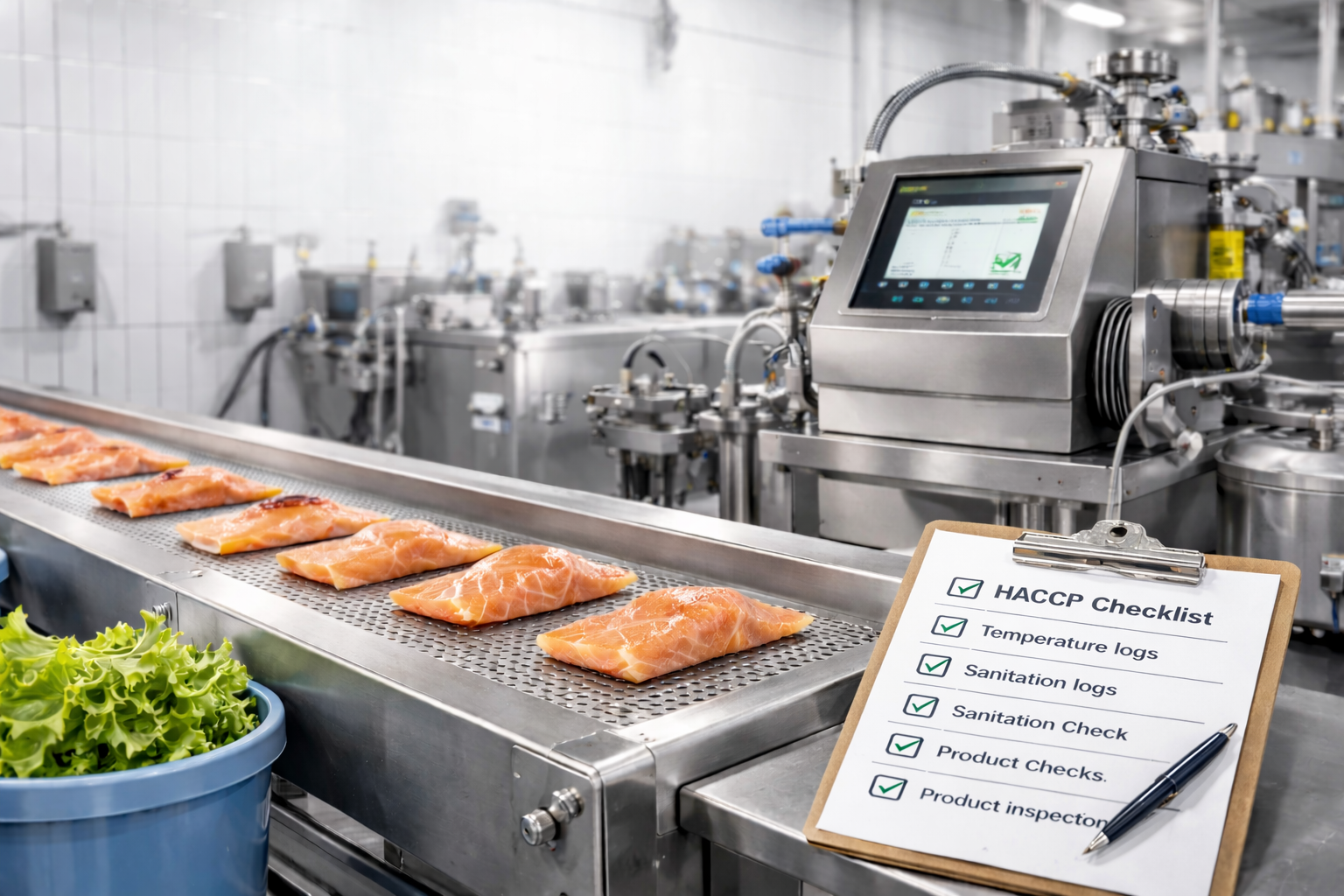
Food manufacturers operating under HACCP (Hazard Analysis and Critical Control Points) principles are required to identify and control all physical contamination risks. Cable ties — used throughout food plants to manage cables, bundle hoses, secure guards, and organise pipework — are a recognised physical hazard if they fail.
Major food safety certification schemes specifically address this:
Relevant Standards
- BRC Global Standard for Food Safety — Requires control of physical contamination hazards; detectable materials are the recognised solution for fixings above or near open food.
- IFS Food Standard — Similar requirements covering physical contaminant control in food handling areas.
- HACCP Plans — Site-specific hazard analysis should identify all plastic fixings in food zones as potential physical hazards and document controls.
- SQF (Safe Quality Food) — Requires documented foreign body prevention programmes covering all fixings and fastenings.
How Metal Detection Works
Industrial metal detectors work by generating an electromagnetic field. When a metallic object passes through, it disrupts this field and triggers a reject mechanism. Standard nylon cable ties contain no metallic content and pass through undetected — which is why a fragment from a standard tie in your product is invisible to your safety systems.
Metal detectable cable ties contain a compound that responds to this electromagnetic field. The minimum detectable size depends on your detector's sensitivity settings, but most certified detectable ties will trigger detection of fragments as small as 2–3mm under standard food industry settings.
Metal Detection vs X-Ray
- Metal detection — Most common in food plants. Detectable ties with metallic additives are designed for this.
- X-ray inspection — Some facilities use X-ray alongside or instead of metal detection. Check with your supplier whether the ties are also X-ray detectable.
- Combined systems — If your plant uses both, confirm detectability for each system separately.
Where to Use Metal Detectable Cable Ties
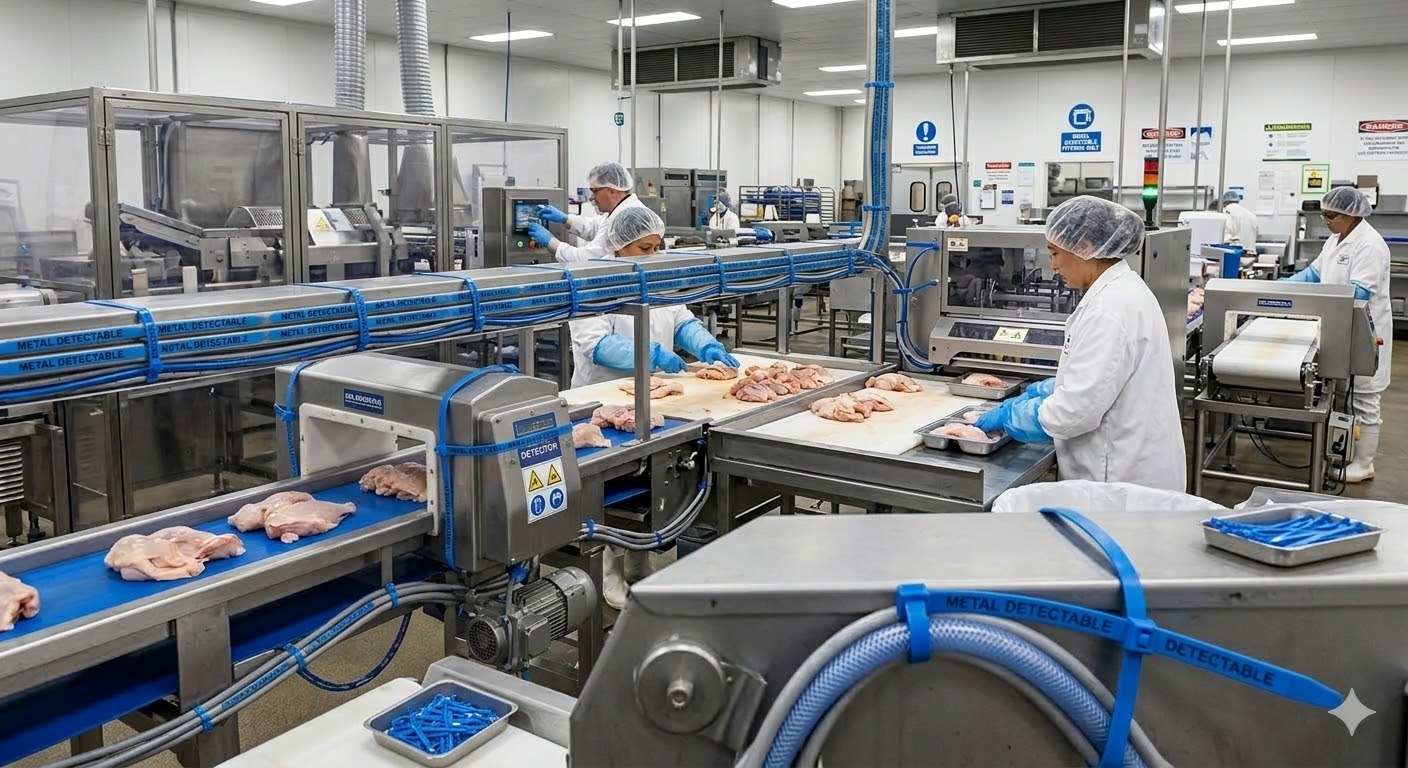
Not every cable tie in your facility needs to be detectable — but any tie that could realistically end up in a food product should be. As a rule of thumb:
- Any area where food is open, unwrapped, or unpackaged
- Above or adjacent to food production lines or conveyors
- On equipment that is cleaned in place or moved near food zones
- In packaging areas where the product is still unsealed
- On cable bundles, hose runs, or guards directly over food handling surfaces — see our Cable Tie Uses by Industry guide for more application examples
"We supply metal detectable cable ties to food manufacturers who need to ensure nothing gets lost when it comes to food and potential contamination issues. The blue colour is the first check, it should stand out at first glance, if it ends up somewhere it shouldn't be. The metal detection is the safety net, not the primary defence."
Metal Detectable vs Standard Cable Ties
| Feature | Standard Cable Tie | Metal Detectable Cable Tie |
|---|---|---|
| Detectable by metal detector | ❌ No | ✔ Yes |
| Visually distinctive colour | Various (often black/natural) | Blue (food industry standard) |
| Suitable for open food areas | ❌ Not recommended | ✔ Yes |
| BRC / HACCP compliant | ❌ Not in food zones | ✔ Yes |
| Tensile strength | Standard nylon performance | Comparable — no significant loss |
| Cost | £ | ££ (modest premium) |
Choosing the Right Metal Detectable Cable Tie
When selecting detectable ties for your facility, consider the following:
Shop Metal Detectable Cable Ties
GTSE stocks blue metal detectable cable ties in a range of sizes — suitable for food manufacturing, pharmaceutical, and other hygiene-critical environments.
Shop Metal Detectable Cable Ties