





Coated vs Uncoated Stainless Steel Cable Ties: Which Should You Choose?
Stainless steel cable ties come in three main variants: uncoated (bare metal), PVC coated, and epoxy coated. Each has its place — choosing the right one depends on your application, environment, and what you're securing.
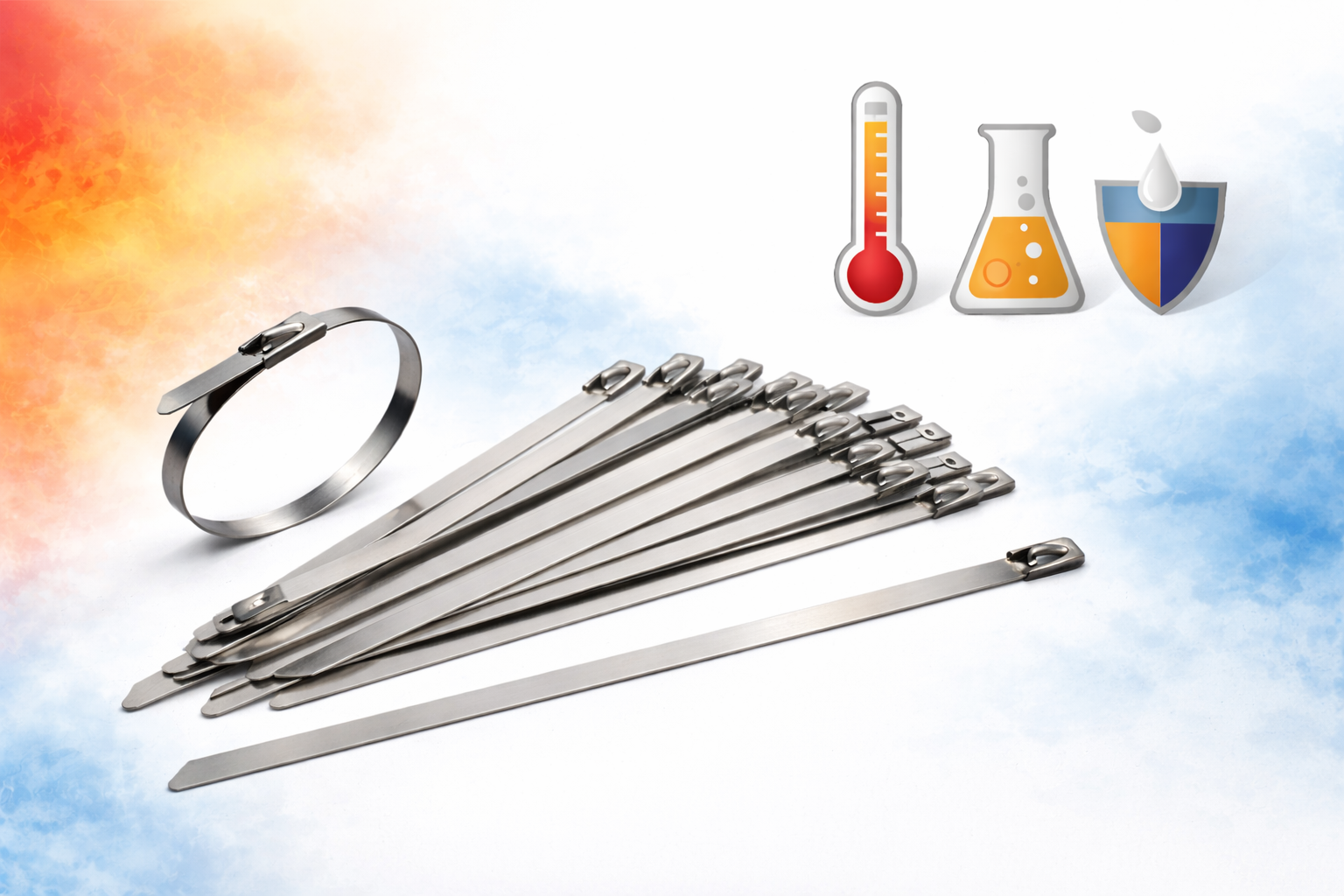
Uncoated Stainless Steel Cable Ties
Bare stainless steel ties with no protective coating. The metal is fully exposed.
Best for:
- High-temperature applications (exhaust systems, engine bays, ovens)
- Situations where coating could melt or degrade
- Maximum strength requirements
- Cost-sensitive projects where coating isn't needed
Advantages
- Highest temperature tolerance (up to 538°C)
- No coating to melt, crack, or peel
- Lower cost than coated alternatives
- Full metal-to-metal contact for grounding applications
Considerations:
- Metal edges can damage delicate cables or surfaces
- Can cause galvanic corrosion when in contact with dissimilar metals
- May scratch painted or powder-coated surfaces
PVC Coated Stainless Steel Cable Ties
Stainless steel core with a polyvinyl chloride (PVC) outer layer. The most popular coated option.
Best for:
- Protecting cable insulation from damage
- Marine and outdoor applications
- Securing items to painted or delicate surfaces
- Reducing vibration noise (coating dampens rattle)
Advantages
- Smooth finish won't cut into cables
- Additional corrosion barrier
- Available in colours for identification
- Prevents galvanic corrosion between metals
- Comfortable to handle — no sharp edges
Considerations:
- Lower maximum temperature (typically up to 85°C)
- Coating can crack in extreme cold
- Not suitable for direct high-heat applications
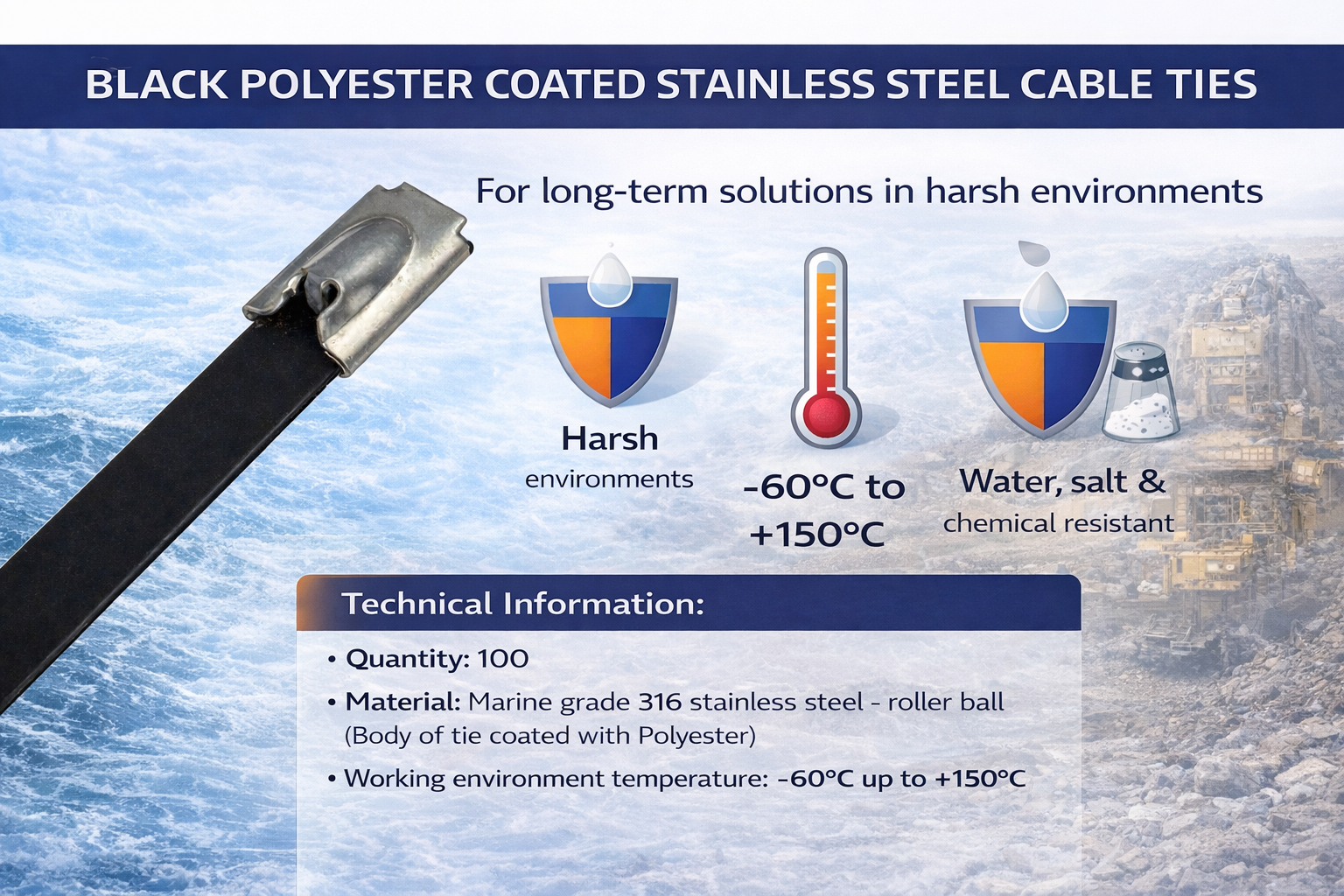
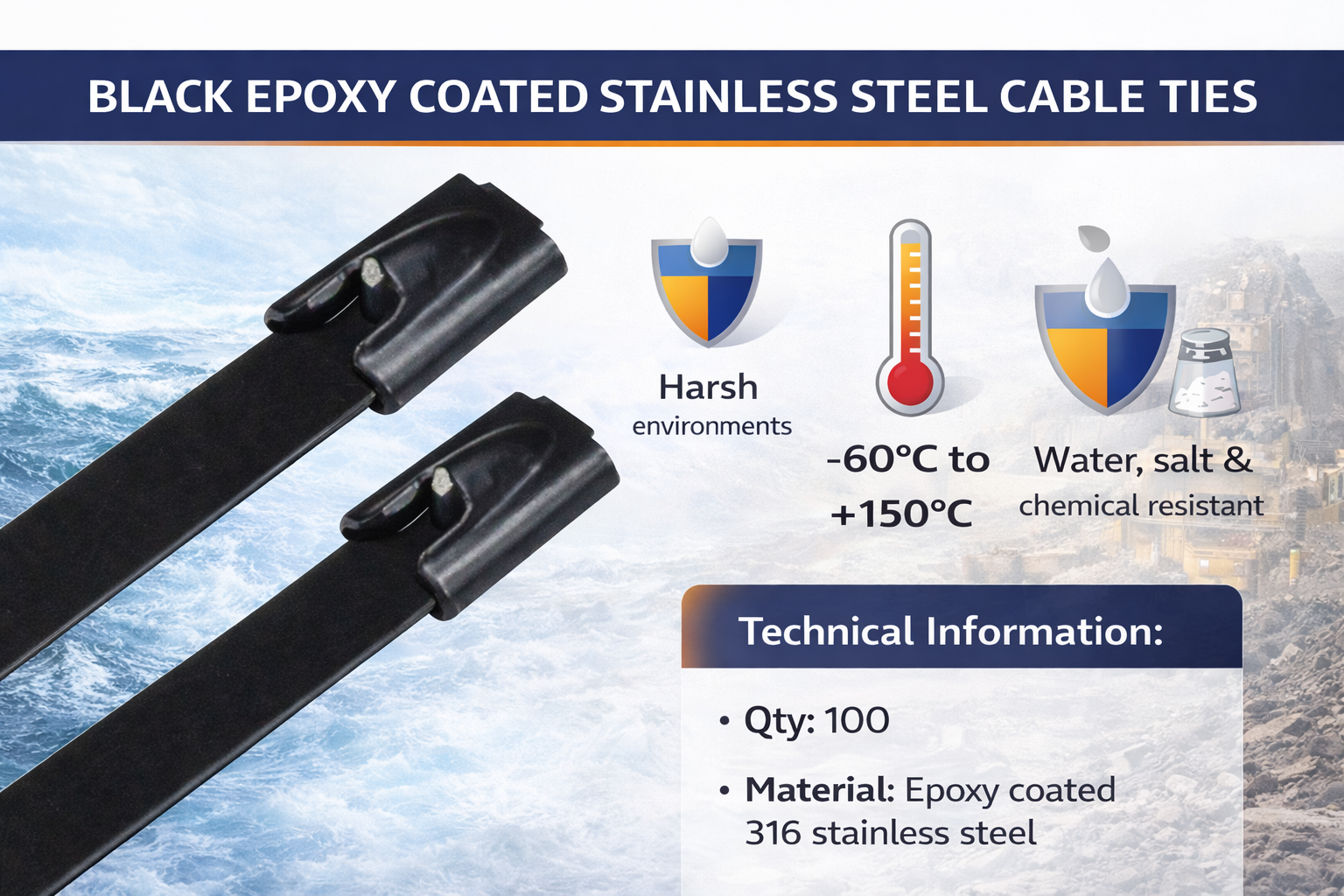
Epoxy Coated Stainless Steel Cable Ties
Stainless steel core with a thermoset epoxy coating. More chemical-resistant than PVC.
Best for:
- Chemical plants and industrial environments
- Applications requiring superior chemical resistance
- Higher temperature coated applications (up to 150°C)
- Underground or buried installations
Advantages
- Excellent chemical and solvent resistance
- Higher temperature tolerance than PVC
- Harder, more abrasion-resistant coating
- Won't swell or degrade in oils and fuels
Considerations:
- Higher cost than PVC coated
- Less flexible — can crack if bent sharply
- Limited colour options
Quick Comparison
| Feature | Uncoated | PVC Coated | Epoxy Coated |
|---|---|---|---|
| Max temperature | 538°C | 85°C | 150°C |
| Cable protection | ❌ None | ✅ Excellent | ✅ Good |
| Chemical resistance | Good | Moderate | Excellent |
| Cost | £ | ££ | £££ |
| Colour options | Silver only | Multiple | Limited |
| Best for | High heat, grounding | General use, marine | Chemical, industrial |
Which Should You Choose?
"The coated ties really provide a great combination of the strength of a stainless tie and the softer coating of the PVC. This means that wire and anything bundled together with them won't risk rubbing on the steel."
When in doubt, PVC coated is the most versatile option for general industrial and trade use.
Browse Our Range
We stock all three types — uncoated, PVC coated, and epoxy coated stainless steel cable ties in various lengths and widths.