





316 vs 304 Stainless Steel Cable Ties: Understanding the Grades
Not all stainless steel is created equal. The grade of steel determines corrosion resistance, strength, and suitability for different environments. For cable ties, the two grades you'll encounter are 304 and 316 — and the difference matters.
What Do the Numbers Mean?
304 and 316 refer to specific alloy compositions defined by international standards. The key difference is what's added to the steel:
- 304 Stainless Steel: 18% chromium, 8% nickel
- 316 Stainless Steel: 16% chromium, 10% nickel, 2% molybdenum
The Key Difference
That 2% molybdenum in 316 is the game-changer — it dramatically improves resistance to chlorides, salt, and aggressive chemicals.
304 Stainless Steel Cable Ties
The most common grade of stainless steel worldwide. Offers good general corrosion resistance at a lower cost.
Best for:
- Indoor applications
- General industrial use
- Environments without salt or chlorides
- Budget-conscious projects
Limitations:
- Susceptible to pitting in chloride environments
- Not recommended for marine or coastal use
- Can corrode in chemical processing environments
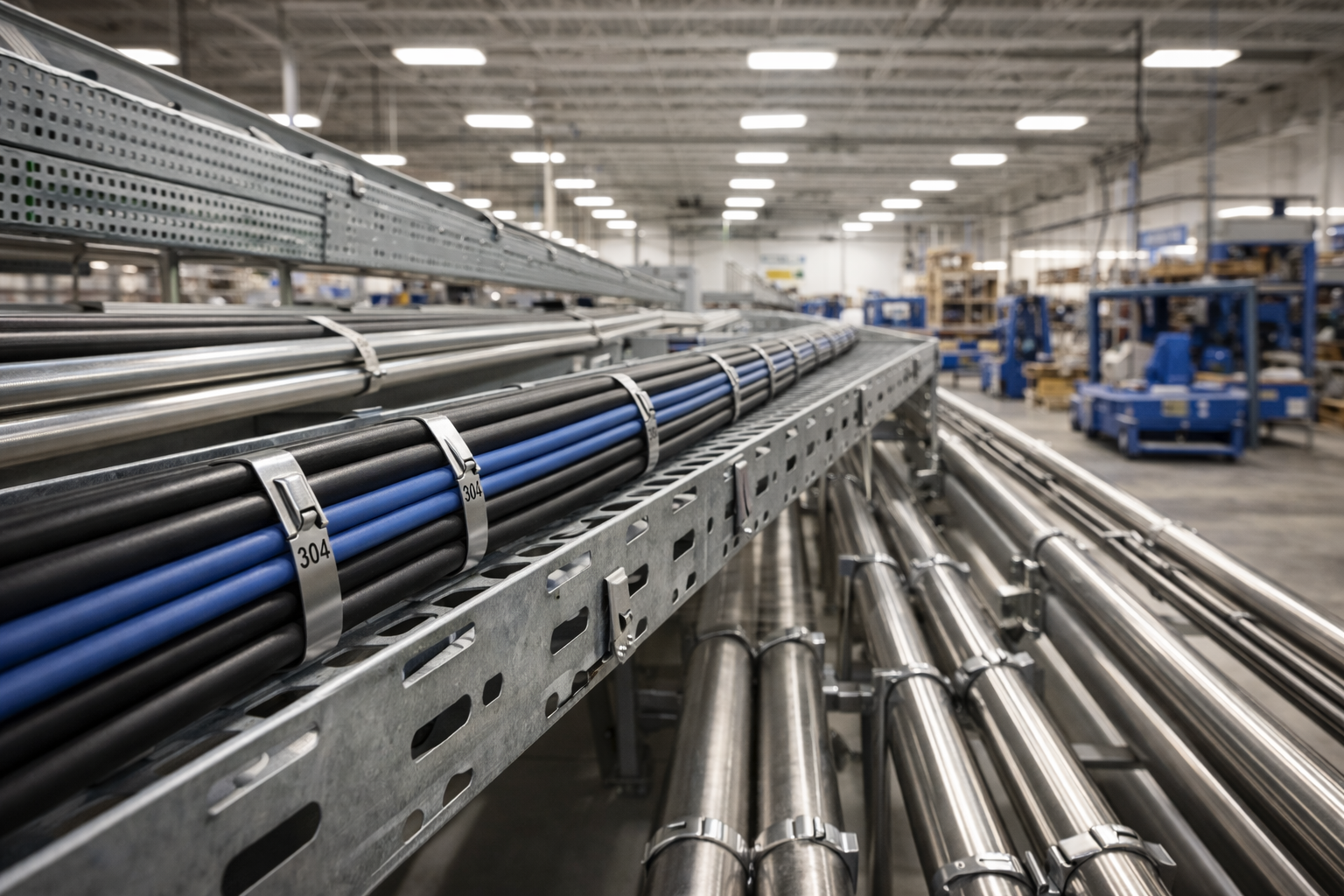
316 Stainless Steel Cable Ties
The premium marine-grade stainless steel. Superior corrosion resistance for demanding environments.
Best for:
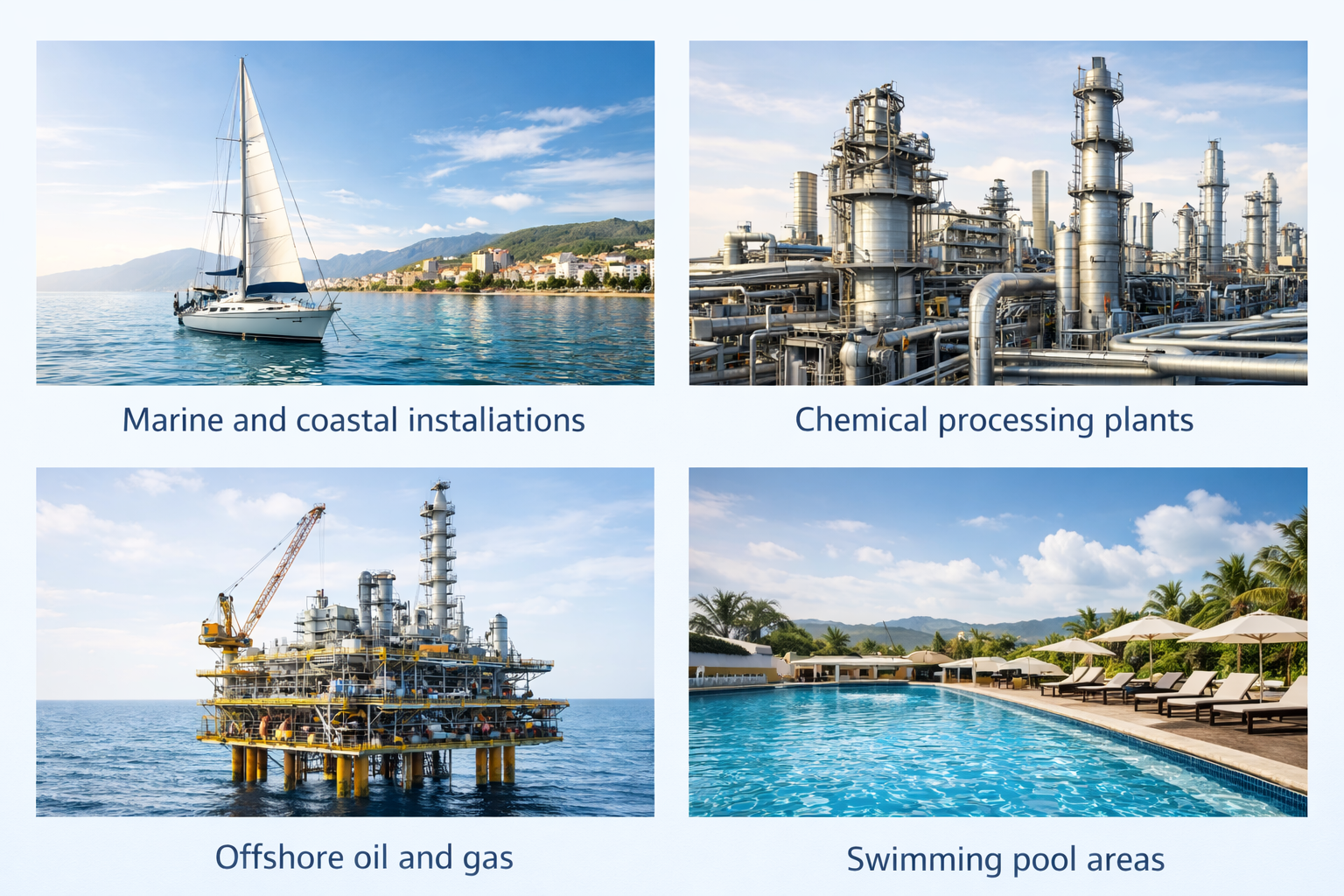
- Marine and coastal installations
- Chemical processing plants
- Offshore oil and gas
- Swimming pool areas
- Food processing (chlorinated cleaning)
- Any environment with salt, chlorides, or aggressive chemicals
- Resists pitting and crevice corrosion
- Handles chloride exposure that destroys 304
- Longer service life in harsh conditions
- Lower lifetime cost despite higher purchase price
Head-to-Head Comparison
| Property | 304 Grade | 316 Grade |
|---|---|---|
| Chromium content | 18% | 16% |
| Nickel content | 8% | 10% |
| Molybdenum | None | 2% |
| Chloride resistance | Poor | Excellent |
| Marine suitability | ❌ No | ✅ Yes |
| Chemical resistance | Good | Excellent |
| Cost | Lower | ~20-30% higher |
| Tensile strength | Similar | Similar |
The Chloride Problem
Chlorides are everywhere: seawater, road salt, cleaning chemicals, swimming pools, food processing. They attack stainless steel by breaking down the protective oxide layer, causing pitting corrosion.
304 stainless steel is vulnerable to this attack. 316's molybdenum content provides a chemical barrier that resists chloride penetration.
Rule of Thumb
If there's any chance of salt, seawater, or chlorine exposure — use 316.
Why GTSE Uses 316 Grade
GTSE's stainless steel cable ties are made from 316 grade steel because:
- It covers the widest range of applications
- Customers don't have to guess which grade they need
- The cost difference is minimal compared to failure costs
- One product works from the workshop to the offshore platform
"It's really a decision of how harsh the environment that the ties will be used in is. If there's going to be chemical damage, then saving the money on purchasing 304 ties might mean that the tie needs to be replaced sooner. Most DIY and everyday securing solutions, the 304 ties will do a great job, though as these are still stainless steel."
When 304 is Acceptable
304 grade cable ties are fine for:
- Indoor use with no chemical exposure
- Temporary installations
- Dry, controlled environments
- Applications where replacement is easy
Shop Stainless Steel Cable Ties
All GTSE stainless steel cable ties are manufactured from premium 316 grade steel for maximum corrosion resistance.
View Full Range