



Cable Glands — Types, IP Ratings & Selection Guide
Cable glands are the critical connection point between cables and electrical enclosures. This comprehensive guide covers GTSE's complete range from weatherproof plastic glands to heavy-duty brass options, helping you achieve professional installations with proper IP ratings.
Cable glands serve as the vital interface between cables and electrical enclosures, providing strain relief, environmental sealing, and EMC protection. Whether you're installing outdoor lighting, industrial control panels, or marine electronics, choosing the right cable gland ensures reliable, long-lasting connections.
This buyer's guide will help you understand the different types available, decode IP ratings, and select the perfect gland for your specific application.
What Are Cable Glands and Why Do You Need Them?
Cable glands (also called cable connectors or cord grips) are mechanical devices that secure and seal cables where they enter electrical enclosures, control panels, or junction boxes.
Essential Functions:
- Strain relief: Prevents cable damage from pulling or flexing
- Environmental sealing: Protects against water, dust, and contaminants
- EMC shielding: Maintains electromagnetic compatibility (brass glands)
- Safety compliance: Meets electrical installation standards
Critical Safety Point
Without proper cable glands, electrical installations can fail IP ratings, allow moisture ingress, or create safety hazards. Professional installations always use appropriately rated glands for long-term reliability.
GTSE Cable Glands Range: Professional Solutions
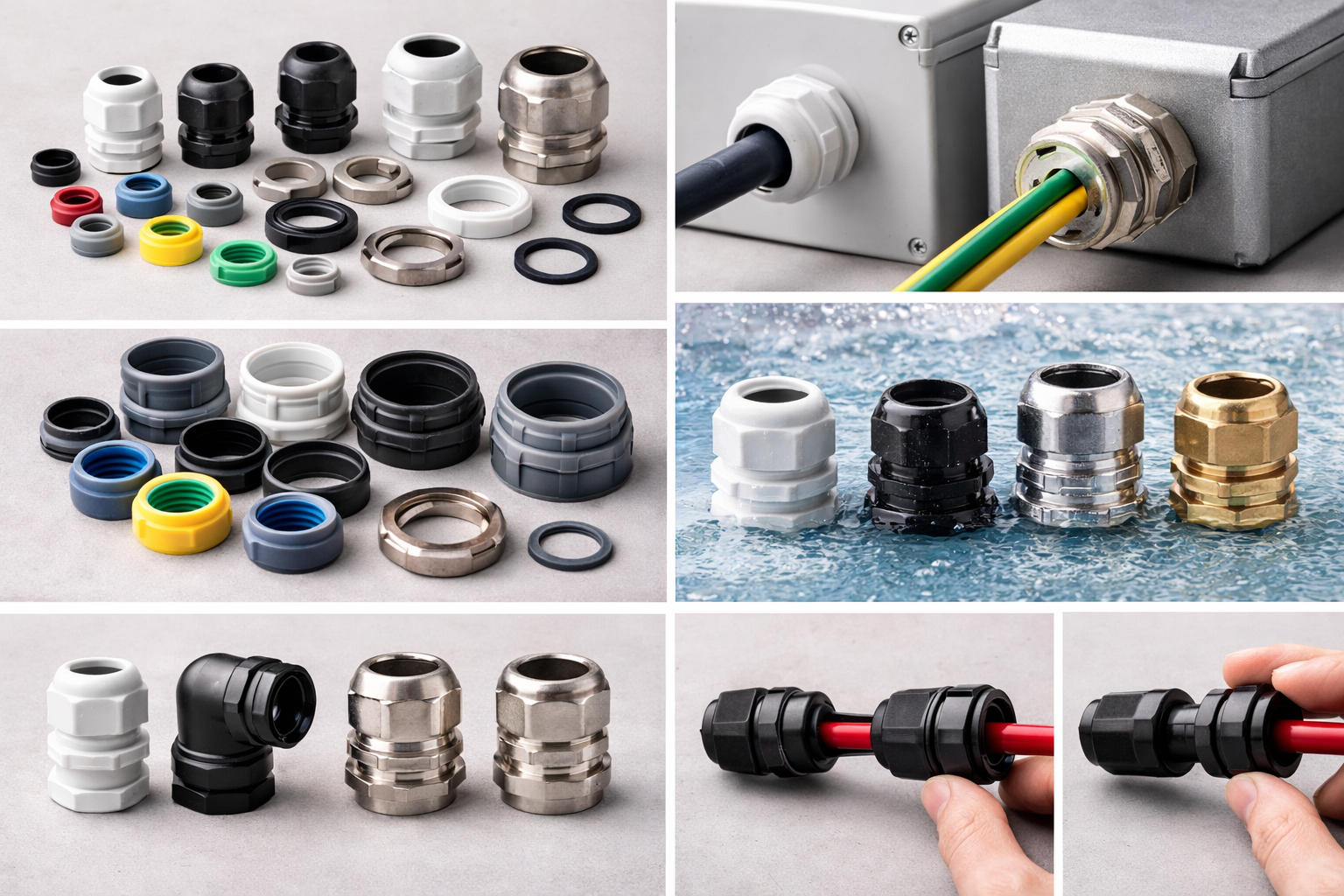
GTSE stocks comprehensive cable gland solutions from cost-effective plastic options to professional brass systems for demanding environments.
| GTSE Product Type | Material | Best For | Shop Link |
|---|---|---|---|
| Plastic/Nylon Cable Glands | Nylon 66 with rubber seals | General electrical, outdoor installations, weatherproofing | View Plastic Range → |
| BW Brass Cable Glands | Brass with PVC shrouds & earth tags | Indoor industrial, high temp, EMC applications | View Brass Range → |
GTSE Complete Systems
All GTSE cable glands come as complete systems including locking nuts, rubber washers, and installation components. Brass gland kits include PVC shrouds and earthing tags for professional installations.
Shop All Cable GlandsGTSE Plastic Cable Glands: Weatherproof Protection
Our plastic cable glands offer excellent value with professional IP-rated sealing for outdoor and general electrical applications. Available in multiple colors to suit your installation requirements.
GTSE Plastic Gland Features
Standard Plastic Range
- High-grade Nylon 66 construction
- Rubber washers for IP sealing
- Locking nuts included
- Multiple thread sizes available
Color Options Available
- Black: General purpose, UV resistant
- Grey: Industrial standard RAL 7035
- White: Clean installations, indoor use
- Red: Emergency/fire alarm circuits
All colors with same IP performance
IP Ratings Explained
| IP Rating | Dust Protection | Water Protection | Typical Applications |
|---|---|---|---|
| IP54 | Limited dust protection | Splash protection | Indoor, sheltered outdoor |
| IP65 | Dust-tight | Water jet protection | Outdoor electrical, washdown areas |
| IP67 | Dust-tight | Submersion to 1m | Marine, underground, extreme weather |
| IP68 | Dust-tight | Continuous submersion | Permanent underwater installations |
GTSE Brass Cable Glands: Heavy-Duty Performance
GTSE's BW brass cable glands are engineered for demanding industrial applications where mechanical strength, temperature resistance, and EMC shielding are critical.
Professional Grade Construction
- Brass body: Corrosion resistant, high strength
- Temperature range: -80°C to +300°C operation
- Complete kits: Including PVC shrouds, lock rings, earth tags
- Indoor rated: Designed for controlled environments
"Our BW brass glands come with earth tags as standard because proper EMC earthing isn’t something you can afford to overlook in control panels. Brass gives you reliable conductivity for shield termination, and the temperature range means they’ll handle anything from cold environments through to higher heat applications."
GTSE Brass Glands Size Range & Specifications
| Thread Size | Cable Diameter Range | Thread Length | Kit Contents |
|---|---|---|---|
| M20 | 12.3-20.0mm | 10mm | 2 glands + shrouds + earth tags |
| M25 | 20.4-27.0mm | 10mm | 2 glands + shrouds + earth tags |
| M32 | 26.5-33.5mm | 10mm | 2 glands + shrouds + earth tags |
| M40 | 33.0-41.5mm | 15mm | 1 gland + shroud + earth tag |
| M50 | 44.0-54.0mm | 15mm | 1 gland + shroud + earth tag |
| M75 | 67.5-78.5mm | 15mm | 1 gland + shroud + earth tag |
How to Select the Right Cable Gland
Choosing the correct cable gland involves several critical factors. Follow this systematic approach for professional results:
1. Environmental Assessment
| Environment | Required IP Rating | Recommended Material |
|---|---|---|
| Indoor dry locations | IP54 minimum | Plastic or Brass (industrial) |
| Outdoor installations | IP65 minimum | Plastic with UV resistance |
| Washdown/marine areas | IP67 minimum | High-grade plastic |
| High temperature areas | As required | Brass (-80°C to +300°C) |
2. Cable Measurement Guide
- Overall diameter: Measure including outer insulation/sheath
- Minimum bend radius: Ensure adequate clearance inside enclosure
- Cable type: Armored cables may require larger glands
- Future expansion: Consider if additional cables will be added
3. Thread Size Selection
| Metric Thread | Hole Diameter | Typical Cable Range | Common Applications |
|---|---|---|---|
| M12 | 12mm | 3-8mm | Sensor cables, small signal wires |
| M16 | 16mm | 5-10mm | Control cables, small power |
| M20 | 20mm | 6-14mm | Standard power cables, lighting |
| M25 | 25mm | 13-18mm | Heavy power cables, multi-core |
Critical Installation Tip
Always ensure adequate thread engagement - minimum 5 full threads inside the enclosure wall. For thin panels, use extended thread glands or backing nuts to maintain proper sealing.
Installation Best Practices
Step-by-Step Installation
- Panel preparation: Ensure hole is clean, smooth, and correct diameter
- Thread inspection: Check threads for damage or foreign matter
- Seal placement: Position rubber washer correctly on gland body
- Cable insertion: Thread cable through gland before panel mounting
- Tightening sequence: Hand-tight plus 1-2 turns maximum
- Final check: Verify sealing washer compression and cable grip
Common Installation Mistakes
| Mistake | Consequence | Prevention |
|---|---|---|
| Over-tightening | Thread damage, seal deformation | Use correct torque, hand-tight + 1-2 turns |
| Wrong hole size | Poor sealing, thread mismatch | Verify thread pitch before cutting holes |
| Missing washer | IP rating failure, moisture ingress | Always check kit contents before installation |
| Cable too tight in gland | Cable damage, poor strain relief | Select gland with appropriate diameter range |
Frequently Asked Questions
What is the difference between plastic and brass cable glands?
Plastic cable glands offer good weather resistance and are cost-effective for most applications. Brass glands provide superior mechanical strength, higher temperature tolerance (-80°C to +300°C), and better EMC shielding for industrial environments.
What do IP ratings mean for cable glands?
IP ratings indicate protection levels. IP65 provides dust-tight sealing and protection against water jets. IP67 offers submersion protection up to 1 meter. Higher ratings like IP68 allow continuous submersion and are ideal for harsh outdoor installations.
How do I determine the correct thread size?
Thread size corresponds to the hole diameter in your enclosure. Common metric sizes include M12, M16, M20, M25, M32. The thread size must match your panel cutout, while the cable diameter must fit within the gland's specified range.
Can I use one gland for multiple cables?
While possible, it's not recommended as it reduces sealing effectiveness and strain relief. Use separate glands for each cable, or consider multi-entry glands specifically designed for multiple cables.
How often should cable glands be replaced?
Quality cable glands can last decades when properly installed. However, inspect annually for UV degradation (plastic), corrosion (brass), or seal deterioration. Replace if IP rating performance is questionable.
Conclusion
Selecting the right cable gland is crucial for electrical installation safety, reliability, and compliance. GTSE's comprehensive range covers everything from basic plastic glands for outdoor lighting to professional brass systems for industrial control panels.
Remember that the highest-quality gland is worthless if incorrectly installed. Take time to measure accurately, select appropriate IP ratings, and follow proper installation procedures for long-lasting, trouble-free performance.
Need professional cable glands?
Browse GTSE's complete range with competitive trade pricing and complete installation kits included.
Shop All GTSE Cable Glands