



Cable Clips & Fixings — Types, Sizes & Installation Guide
Cable clips and fixings are essential for securing cables safely and professionally. This guide covers types, materials, sizes and installation best practices to help you achieve reliable cable management.
Cable clips and fixings are often overlooked, but they play a critical role in the safety, organisation and long-term reliability of any electrical installation. Whether you're running cables through a domestic property, fitting out a commercial building, or securing wiring in an industrial environment, the right cable fixing solution ensures your installation performs as intended.
This guide covers everything you need to know — from the different types of cable clips available to material selection, sizing and installation best practices. By the end, you’ll be able to confidently choose the right fixing for your application and achieve a clean, professional result.
What Are Cable Clips and Why Do They Matter?
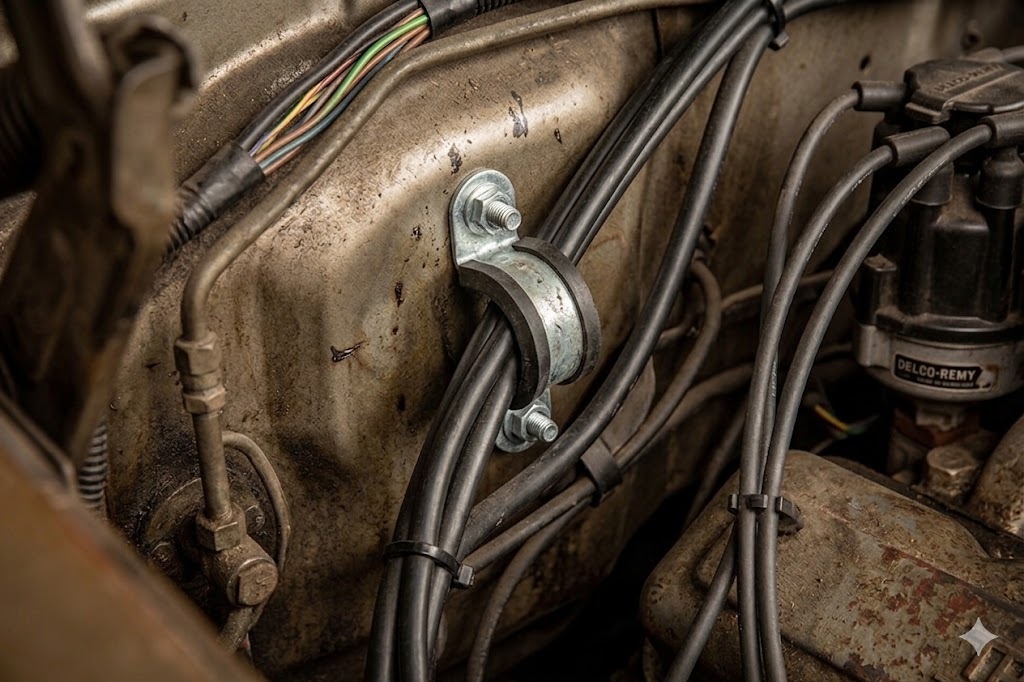
Cable clips (also known as cable fixings) are designed to secure cables to surfaces such as walls, ceilings, trunking or structural elements. Their primary function is to hold cables in place, preventing movement that could lead to wear, strain or failure.
Essential Functions:
- Strain relief: Reduces stress on cable terminations and connections
- Protection: Prevents abrasion, bending damage and impact wear
- Organisation: Keeps installations tidy and easy to maintain
- Safety: Minimises trip hazards and ensures compliance with installation standards
In professional installations, cable clips are not just a finishing touch — they are a fundamental requirement for achieving safe, durable and compliant cable management.
"The most common mistake with cable clips and fixings is choosing the wrong size or type for the surface. Secure installations rely on both the cable diameter and the material you're fixing into. Getting this match right ensures a long-lasting hold."
Types of Cable Clips & Fixings
Different cable types and installation environments require different fixing solutions. Choosing the correct type ensures both performance and longevity.
| Type | Best For | Key Advantage |
|---|---|---|
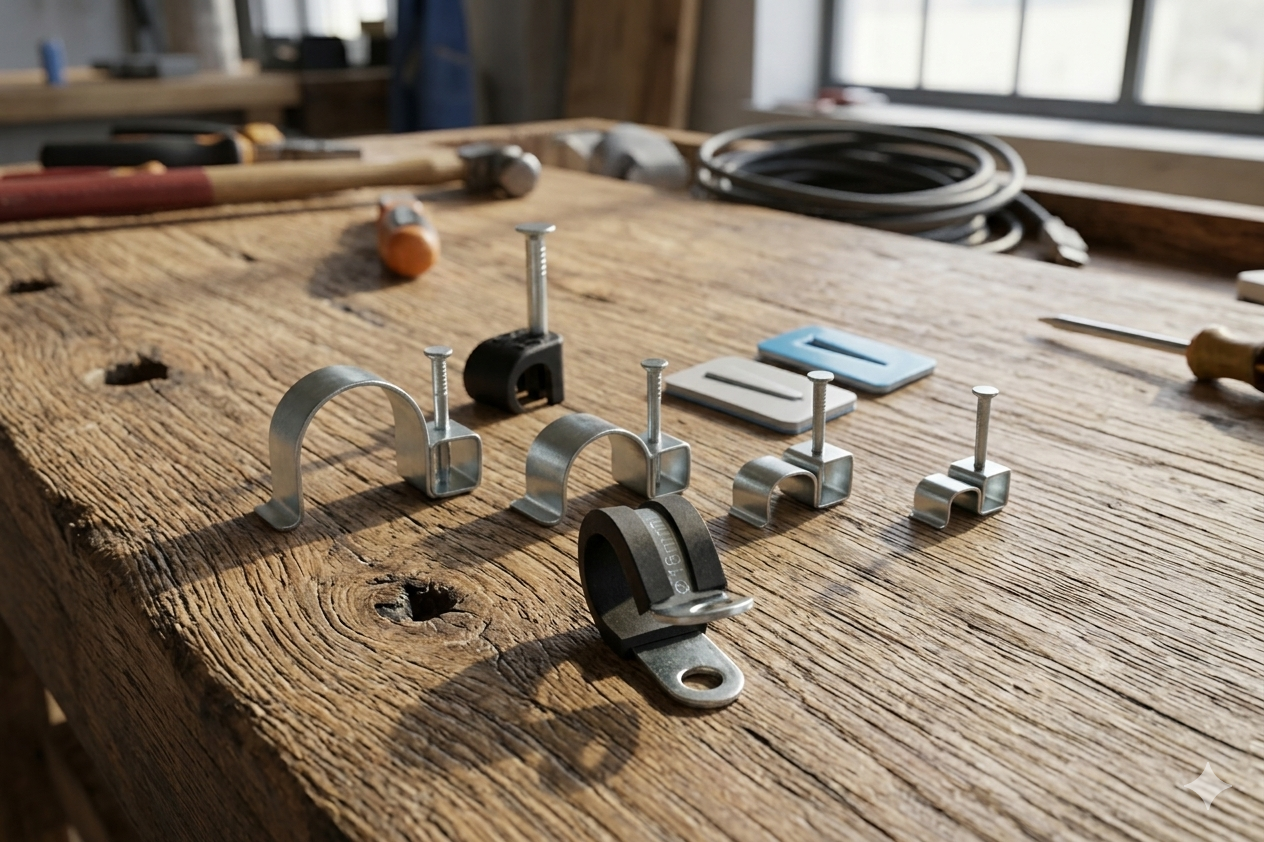
| Round Cable Clips | Twin & earth, general wiring | Fast, secure everyday fixing |
| Flat Cable Clips | TV, satellite, data cables | Low-profile finish |
| Adhesive Clips | Lightweight cables | No drilling required |
| Screw/Nail Clips | Permanent installs | High strength fixing |
| P-Clips | Industrial, automotive | Handles vibration & heavy loads |
For most domestic electrical work, round clips are the standard choice. However, for heavier cables or environments subject to vibration, more robust options such as P-clips should be used.
Materials & Performance
The material of a cable clip directly impacts its durability and suitability for different environments.
- Nylon (UV-stabilised): Ideal for outdoor use, resistant to sunlight and weather exposure
- Plastic: Cost-effective for indoor applications with stable conditions
- Metal: High strength for industrial and heavy-duty applications
- Rubber-lined metal: Protects cables from vibration and reduces wear
In outdoor or harsh environments, always prioritise UV-resistant or corrosion-resistant materials to avoid premature failure.
Cable Clip Sizing Guide
Correct sizing is critical. A poorly sized clip can either damage the cable or fail to support it properly.
- 4–6mm: Small signal cables, alarm wiring
- 6–10mm: Standard electrical wiring
- 10mm+: Power cables and multi-core cables
Always measure the external cable diameter including insulation. The clip should hold the cable securely without compressing it.
Installation Best Practices
Even the best cable clips will underperform if installed incorrectly. Following best practices ensures long-term reliability.
Key Guidelines:
- Space clips evenly (typically every 300–500mm)
- Use correct fixing method for the surface
- Avoid over-tightening
- Maintain straight, consistent cable runs
- Check alignment before final fixing
Common Mistakes:
- Using clips that are too small (cable damage)
- Spacing clips too far apart (sagging)
- Using adhesive clips in unsuitable environments
Frequently Asked Questions
What size cable clip do I need?
Measure the overall cable diameter, including insulation, and choose a clip that holds the cable securely without compressing it. A clip that is too small can damage the cable sheath, while a clip that is too large may not provide adequate support.
What type of cable clip should I use?
The choice depends on the cable and environment. Round clips are suitable for general wiring, flat clips for data cables, and P-clips for heavy-duty or industrial applications. Adhesive clips should only be used for lightweight indoor installations.
Can cable clips be used outdoors?
Yes, but only if they are made from UV-resistant materials such as nylon or corrosion-resistant metals. Standard plastic clips may degrade over time when exposed to sunlight.
How far apart should cable clips be spaced?
Cable clips should typically be spaced every 300–500mm. For heavier cables or vertical installations, closer spacing may be required to prevent sagging.
Are adhesive cable clips reliable?
They are suitable for lightweight cables and smooth indoor surfaces. For permanent or heavy-duty installations, mechanical fixings such as screw-in clips are recommended.
Conclusion
Cable clips and fixings are a fundamental part of any cable management system. While often seen as a simple component, choosing the right type, size and material has a direct impact on installation quality, safety and long-term performance.
By understanding the different options available and following best installation practices, you can ensure your cable systems remain secure, protected and easy to maintain.
Need professional cable clips & fixings?
Browse GTSE’s complete range with trade pricing and reliable quality.
Shop Cable Clips