





The 5 Cable Management Mistakes Costing Your Business
Posted by Mikey Callaghan on 26th Mar 2026
The 5 Cable Management Mistakes Costing Your Business
Picture this: you're in a busy office, and a client is touring the facility. As you walk past a server rack, they trip over a mass of tangled cables. Not only is it embarrassing, but it also highlights a lack of professionalism and potential safety hazard. This scenario isn't uncommon, and it underscores the importance of effective cable management.
Poor cable management can cost your business time, money, and reputation. From increased downtime due to troubleshooting to potential safety risks, the consequences of neglecting your cables can be significant. Let's explore five common cable management mistakes that could be costing your business, and how to avoid them.
1. Neglecting to Plan Cable Layouts
The Mistake: Many businesses rush the cable installation process without a clear plan, leading to tangled cables, inaccessibility, and potential safety risks. This often results in a messy and frustrating setup that becomes difficult to manage over time.
The Solution: Planning is key to good cable management. Before running any cables, map out the layout. Consider cable length, access points (power outlets, network jacks), and future expansion. Running an extra conduit or leaving space for new cables will save you from redoing the entire setup later.
Key planning considerations:
- Cable Length: Ensure you have the correct cable length for each device.
- Access Points: Identify key access points.
- Future-Proofing: Consider future expansion and ensure you leave room for additional cables.
2. Overloading Cable Trays and Channels
The Mistake: Stuffing too many cables into trays and channels, restricting airflow and making troubleshooting difficult. Overloaded cable trays can also block airflow, leading to overheating, particularly in server rooms.
The Solution: Know the capacity of your cable trays and channels, and avoid exceeding it. Bundle similar cables together using Velcro straps to keep the tray from becoming overcrowded and help prevent signal interference. Ensure adequate airflow, especially in settings where cables are connected to heat-generating equipment.
Best Practices for Cable Tray Management:
- Ensure you know the capacity of the cable tray or channel.
- Group similar cables together using zip ties or Velcro straps.
- Leave room for airflow.
3. Using the Wrong Cable Ties or Fasteners
The Mistake: Using zip ties too tightly, potentially damaging cables or causing signal interference. Additionally, using adhesive clips that aren’t rated for the weight of your cables can cause them to fall, creating a tripping hazard.
The Solution: Opt for Velcro straps instead of plastic zip ties. Velcro straps are reusable and prevent cable pinching. Select fasteners rated for the weight of your cables. Using appropriate ties and fasteners is essential for maintaining cable integrity and performance.
"Selecting the right ties and fasteners is essential for maintaining cable integrity and performance."
Senior Ecommerce Executive
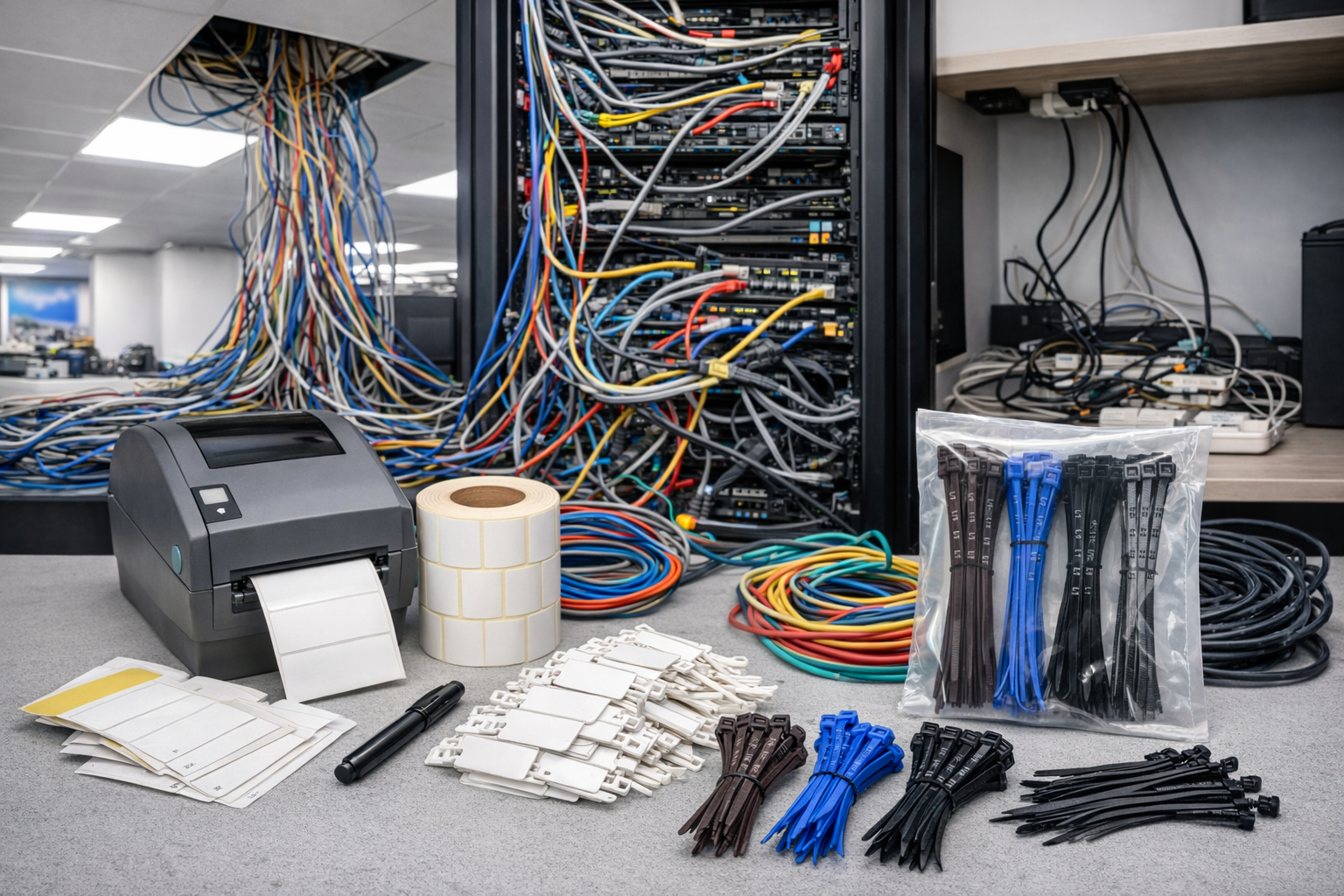
4. Ignoring Cable Labeling
The Mistake: Failing to label cables, leading to confusion and wasted time during maintenance or troubleshooting. This can be a huge time-sink, especially in complex networks.
The Solution: Label both ends of each cable with clear, color-coded labels or a numbering system. This will save you countless hours when you need to identify or replace a cable. Overlooking cable labeling can lead to confusion; label both ends for easy identification and troubleshooting.
5. Failing to Plan for Future Expansion
The Mistake: Not considering future needs, resulting in a chaotic network when new devices are added. This leads to tangled messes and frustration.
The Solution: Leave extra space in your cable management system for future expansion. Use flexible cable trays or organizers that can accommodate growth without requiring a complete overhaul. Planning for future expansion can prevent chaotic networks; anticipate new devices and leave space in your cable management systems.
How To Improve Your Cable Management
Here's a simple guide to improving your cable management:
Assess your current cable situation and identify the problem areas.
Invest in cable management solutions like cable ties, Velcro straps, cable trays, and labels.
Plan your cable routes and secure them using the appropriate management tools.
Label all cables for easy identification during maintenance or troubleshooting.
Regularly inspect and maintain your cable management system to prevent issues and ensure its effectiveness.
Frequently Asked Questions
Why is cable management important for my business?
Cable management is essential for maintaining a safe, efficient, and professional work environment. It reduces trip hazards, improves airflow around equipment, and simplifies maintenance and troubleshooting.
What are the most common types of cable management solutions?
Some common cable management solutions include cable ties, Velcro straps, cable trays, cable sleeves, and labels. The best solution depends on your specific needs and environment.
How often should I inspect my cable management system?
It's recommended to inspect your cable management system regularly, at least once a quarter, to identify any potential issues and ensure its effectiveness. More frequent inspections may be necessary in high-traffic areas or environments with harsh conditions.
Ready to take control of your cables?
Explore our wide range of cable management solutions to create a safer, more organized, and efficient workspace.
Shop Cable Management Solutions