





Aerosols are a common item in many workplaces, used for cleaning, lubricating or applying coatings for protection. But they can also pose a significant health and safety risk if they aren’t stored correctly. Understanding how to store them safely helps prevent accidents, protects your staff and keeps your workplace compliant with safety regulations.
Read on as we explain the hazards, relevant UK regulations and best practices for storage.
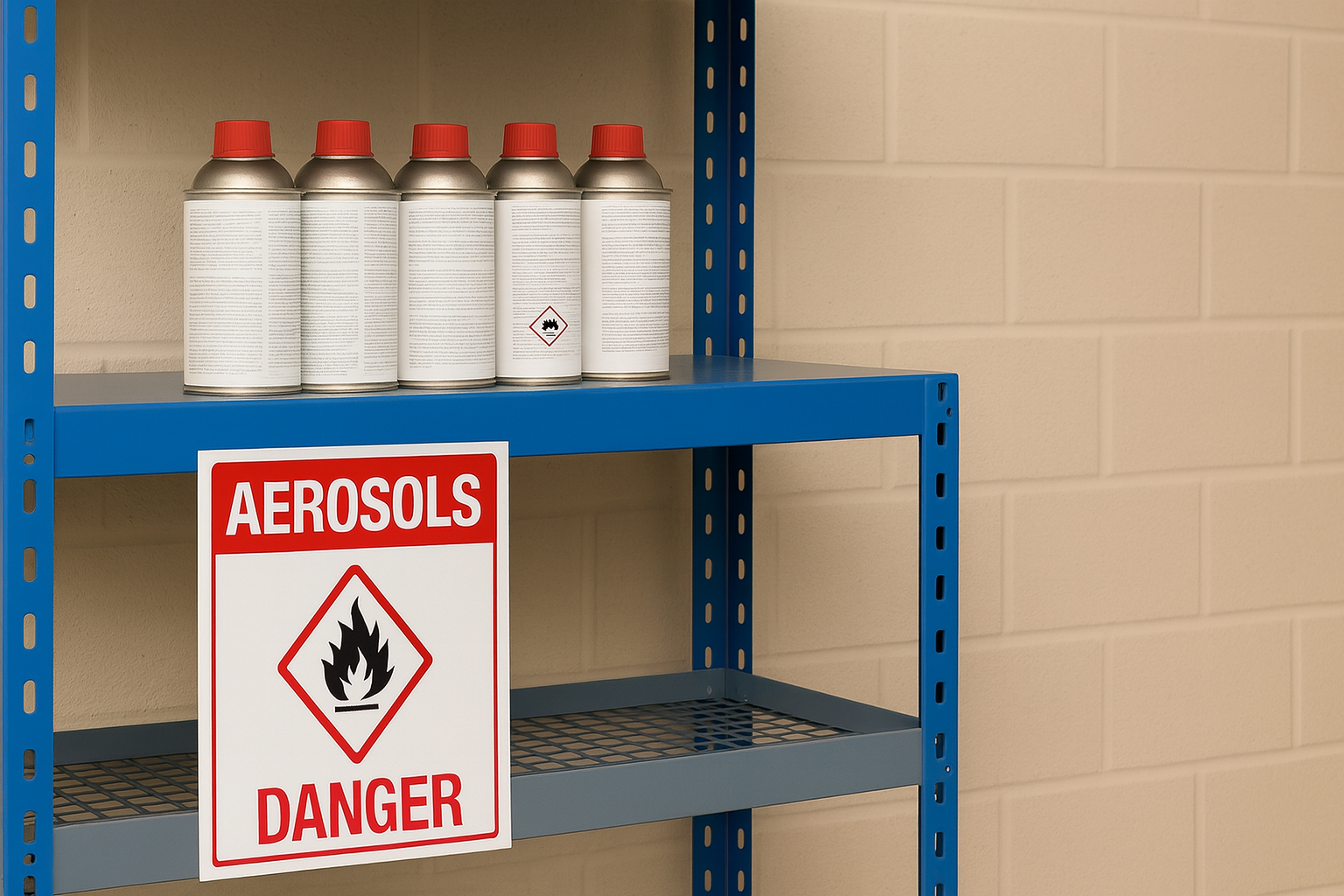
Why aerosol cans are hazardous
Before we have a look at storage rules, it’s important to understand what makes aerosols dangerous. These hazards include:
Flammability
Aerosol cans contain flammable propellants (like butane and propane) or solvents that ignite easily. It only takes a small leak or spray to ignite and cause a fire or explosion.
Pressurised containers
Aerosol cans are under internal pressure. If they get overheated, the pressure rises, which can cause explosions. That could be due to the sun, hot surfaces or heating systems, for example.
Chemical / toxic hazards
The contents of an aerosol can (paints, solvents, adhesives and cleaners) may itself be hazardous. If a can is damaged or leaks, harmful vapours can be released that are corrosive, toxic or irritant.
Incompatibility / reactions
Some aerosols are known to react with acids, bases, oxidisers and other chemicals. For example, a flammable solvent-based aerosol like brake cleaner can react violently with bleach or hydrogen peroxide. This reaction would cause heat, fumes or even fire.
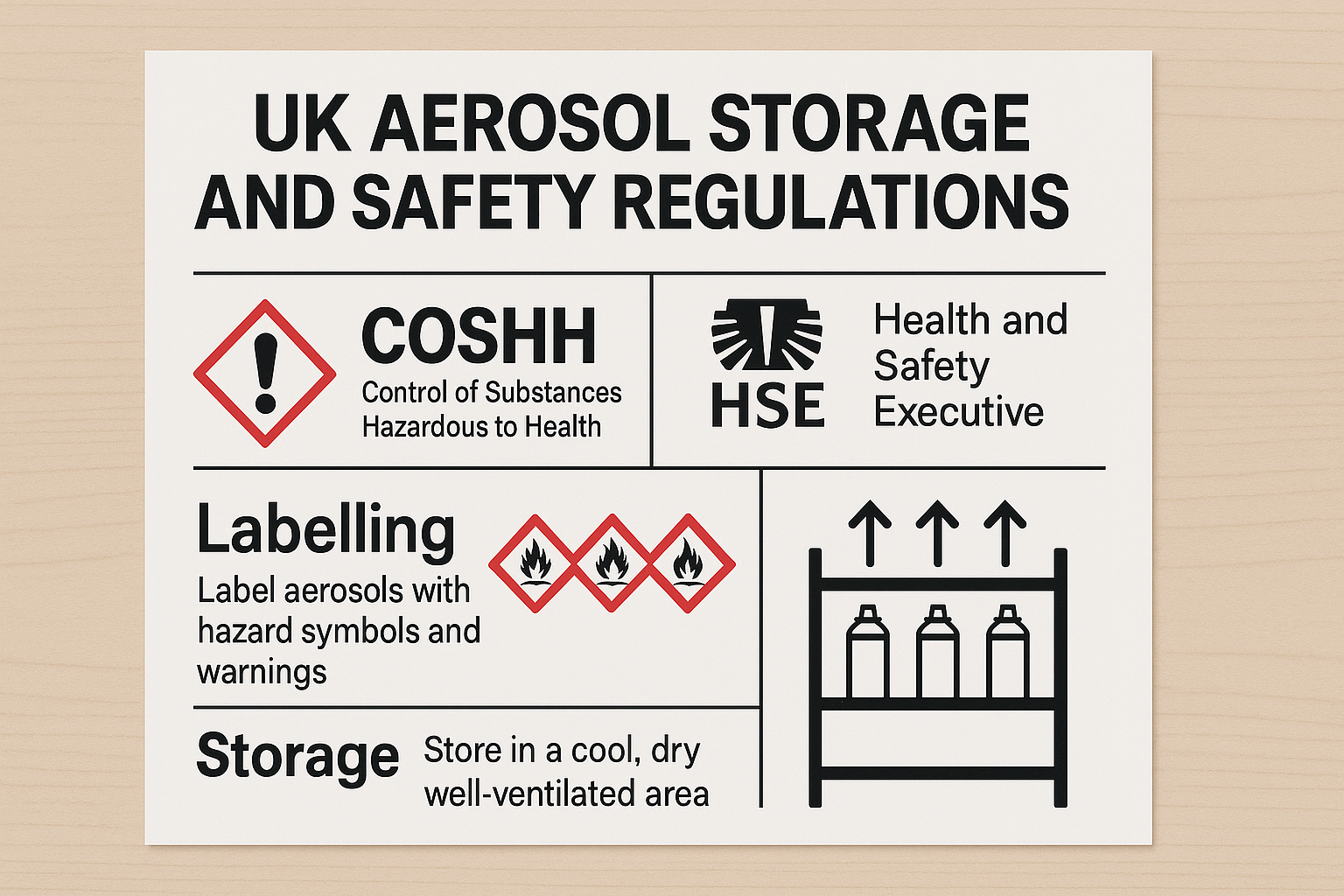
UK regulations & HSE guidance on aerosol storage
In the UK, there are several laws and guidance frameworks on how aerosols should be handled and stored. Read on for the key ones:
Control of Substances Hazardous to Health (COSHH)
Aerosols are classed as ‘substances hazardous to health’ if they are irritants or solvents. It’s important that employers do risk assessments to ensure proper handling, storage and control measures under COSHH.
Provision and Use of Work Equipment Regulations (PUWER)
PUWER makes sure that storage equipment like cabinets and shelving is safe to use for hazardous items. Your equipment should be fit for purpose, in good condition and checked regularly to keep compliant.
Dangerous Substances and Explosive Atmospheres Regulations (DSEAR)
DSEAR is all about keeping flammable stuff, like aerosol sprays, under control. It means spotting the risks and preventing sparks or flames. It also provides information on how to control leaks and making sure areas are properly ventilated so accidents don’t happen.
Health and Safety Executive (HSE) guidance
The HSE provides advice, guidance and real-life examples on storing aerosols, fire safety and using specific storage. Following their guidance isn’t optional. It’s necessary to show you’re taking the right steps to keep your workplace a secure place to be.
Best practices in storing aerosol cans
Storing aerosols safely takes a bit of planning and attention to detail. Here are some easy steps to help you stay compliant:
Plan ahead
Before storing aerosols, check your products and types, amount and flammability levels. Carry out risk assessments using COSHH and DSEAR regulations and choose effective storage.
Ventilation
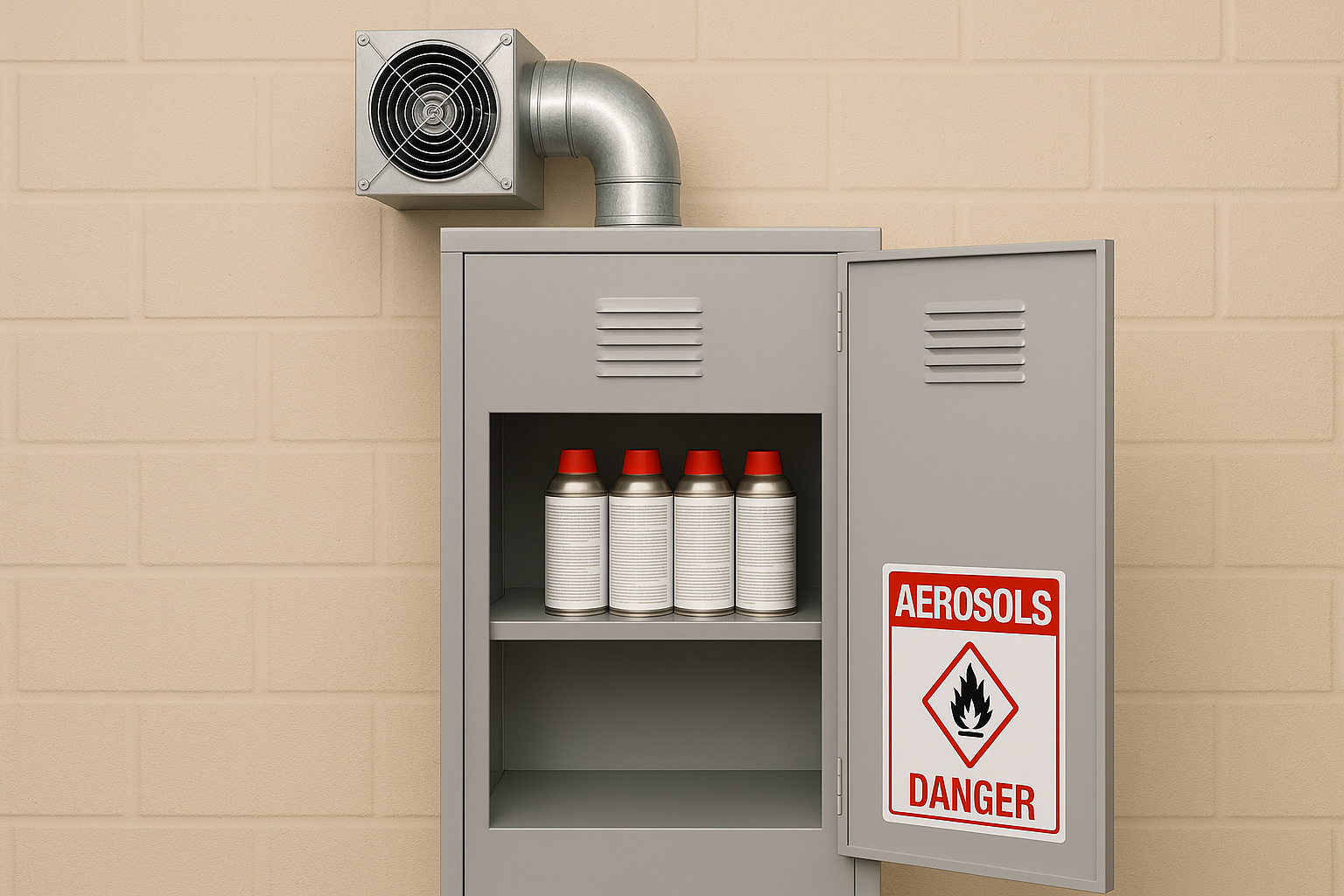
Aerosols should always be kept in a well-ventilated room or cabinet so that vapours don’t build up and create a fire risk. Avoid using sealed cupboards unless they’re fitted with proper vents or an extraction system to let gases escape effectively.
Temperature control
Storage areas or cabinets need to be cool (below 30°C) and away from heat sources such as radiators, heaters, boilers, steam pipes and sunlight. Manufacturer datasheets will let you know the maximum temperature limits.
Keep separate
Aerosols need to be kept separate from ignition sources. These include electrical panels, motors, switches, lighting, open flames, welding equipment and heaters.
To stay compliant use the appropriate signs and if possible, store aerosols in fire-resistant enclosures with safe lighting and wiring. Keep them away from flammable liquids and other hazardous chemicals.
Group similar products together
It’s important to keep incompatible chemicals apart. Store aerosols separate from corrosives, oxidisers, strong acids and bases. In turn, group similar products together. This will reduce the risk of reactions and avoid any confusion. For example, flammable and non-flammable sprays.
Use labels and signs
Clearly mark storage areas and cabinets with hazard signs and ‘No Smoking’ notices. Keeping a log of stored aerosols, including product names, quantities and locations will ensure your inventory is clearly recorded. It’s also important to make sure that safety data sheets (SDS) are available for all staff to access.
Rotate your inventory
Only keep the amount of stock you really need. If you rotate stock using a first-in, first-out system, you’ll avoid any expired or degraded products. Inspect aerosol cans regularly and remove any damaged or leaking units immediately.
Staff training and access control
Only your trained and authorised staff should access any aerosol stores. Remember to carry out regular inspections, stock rotation and a proper handling procedure. This will help maintain a safe and secure environment, reducing any risks.
COSHH storage cabinets
Many workplaces use COSHH or hazardous substance storage cabinets to keep aerosols and chemicals stored correctly.
These cabinets are built to specifically reduce fire and vapour risks. They have features like fire-resistant metal walls, spill trays, ventilation ports, self-closing and lockable doors and clear hazard labels.
Using a proper COSHH cabinet helps you create a protected, safe workplace and stay compliant at the same time.
Safer storage with GTSE
Storing aerosols incorrectly can cause fires, explosions, chemical leaks, damage, injury or even death.
By knowing the risks, following safety guidelines and using the right storage cupboards, you can keep your workplace safe and show you’re storing aerosols responsibly.
Ready to up your storage game? GTSE offers COSHH cupboards & hazardous cupboards in our range of workplace cupboards and cabinets. Find the right fit for you then order with ease.