





Stainless Steel Cable Ties: The Complete Guide
Ecommerce Director | Published: 15 January 2024
When plastic cable ties aren't up to the job, stainless steel cable ties deliver the strength and durability that demanding environments require. From securing exhaust systems in automotive applications to bundling cables in corrosive marine settings, these heavy-duty fasteners handle conditions that would destroy standard nylon ties in weeks.
In this guide, we'll cover everything you need to know about stainless steel cable ties: the different grades available, where they're used, how to choose the right type for your application, and proper installation techniques.
What Are Stainless Steel Cable Ties?
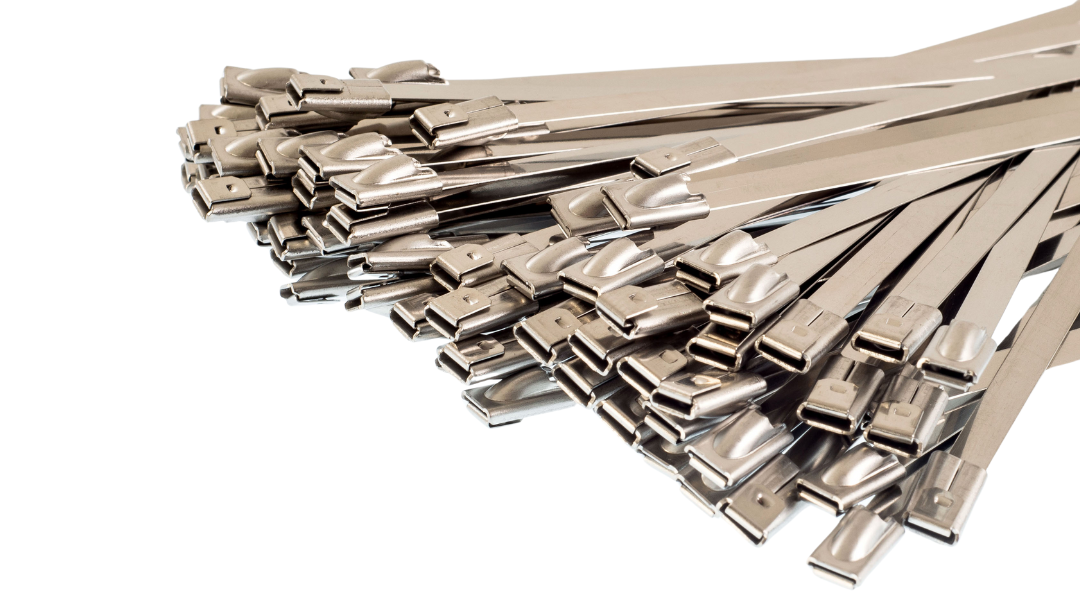
Stainless steel cable ties — also called metal cable ties, steel zip ties, or band clamps — are high-strength fasteners manufactured from corrosion-resistant steel alloys. Unlike plastic alternatives, they feature a ball-lock self-locking mechanism that grips securely and won't slip or loosen under vibration, temperature cycling, or UV exposure.
The two most common grades are:
- 304 Stainless Steel — The standard choice for most industrial applications. Excellent corrosion resistance at a competitive price point.
- 316 Stainless Steel — Contains 2-3% molybdenum for superior resistance to chlorides, acids, and saltwater. Essential for marine, coastal, and chemical processing environments.
Key Features and Benefits
- Exceptional Tensile Strength: Minimum breaking strengths from 450N (45kg) to over 1100N (112kg) depending on width — far exceeding standard nylon ties.
- Extreme Temperature Resistance: Uncoated ties operate from -80°C to +538°C. No melting, no brittleness, no degradation.
- Corrosion and Chemical Resistant: Whether coated or uncoated, they resist rust, acids, alkalis, and most industrial chemicals.
- UV and Weather Stable: No degradation from sunlight exposure — critical for outdoor installations that need to last years, not months.
- Non-Flammable: Won't burn, melt, or release toxic fumes. Compliant with fire-rated installation requirements.
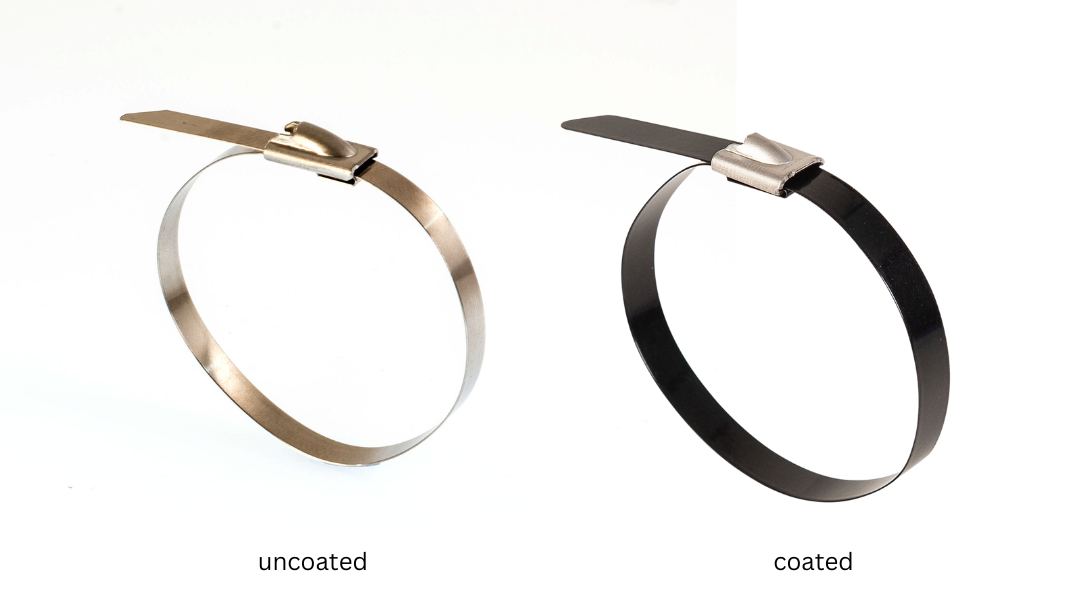
Coated vs. Uncoated: Which Do You Need?
? Pro Tip
Choose coated ties when working with painted surfaces, insulated cables, or soft tubing — the coating prevents scratches and damage. For exhaust wraps, engine bays, or any application exceeding 100°C, always use uncoated.
Common Applications by Industry
Stainless steel cable ties are specified wherever reliability isn't optional:
How to Choose the Right Stainless Steel Cable Ties
Selecting the correct tie involves matching four factors to your application:
1. Grade Selection
- Standard industrial use → 304 stainless steel
- Marine, coastal, chemical exposure → 316 stainless steel
2. Coating
- High temperatures (>100°C) → Uncoated
- Cable protection, handling safety → Coated
3. Width (Tensile Strength)
- Light duty: 4.6mm width (~450N breaking strength)
- Medium duty: 7.9mm width (~680N breaking strength)
- Heavy duty: 12.7mm width (~1100N+ breaking strength)
4. Length
- Measure the bundle circumference and add 75-100mm for the locking head and tensioning
How to Install Stainless Steel Cable Ties
Proper installation ensures maximum holding strength and a professional finish. While hand installation is possible, a tensioning tool delivers consistent results and cuts the excess flush.
- Position the tie: Wrap around the bundle with the ball-lock head accessible. For exhaust wraps, place the lock away from direct heat sources where possible.
- Thread the tail: Insert through the self-locking mechanism until it clicks. Give a light tug to confirm engagement.
- Tension properly: Use a tensioning tool to pull tight — you want firm compression without crushing cables or deforming the bundle.
- Cut flush: The tool cuts the excess tail level with the head, eliminating sharp edges that could cause injury or snag.
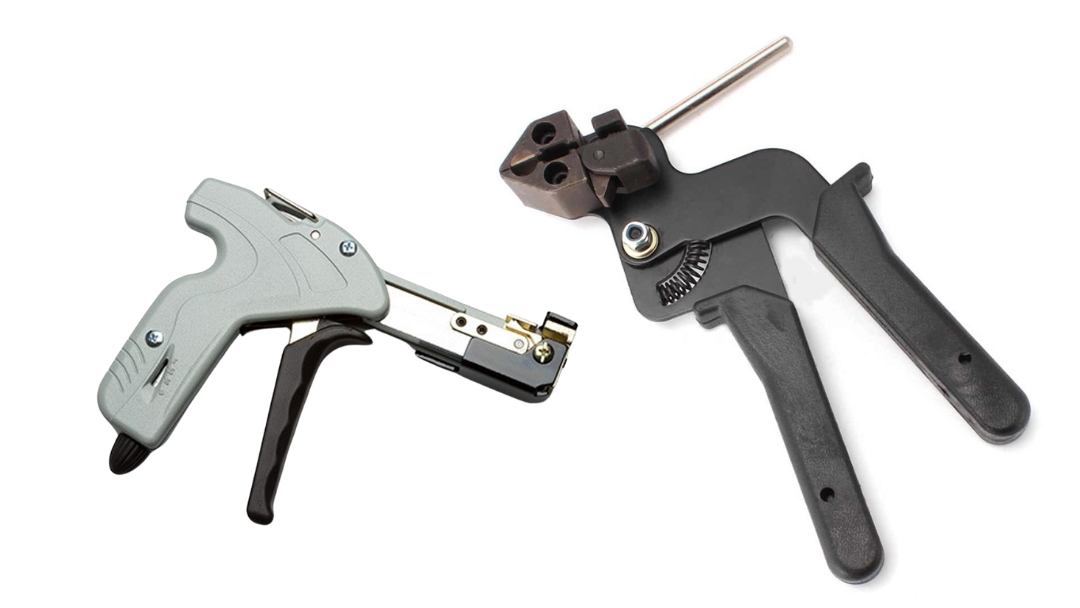
"The most common installation mistake is under-tensioning. A properly installed stainless steel tie should be tight enough that you can't rotate it around the bundle by hand. When in doubt, use a tensioning tool — it takes the guesswork out and gives you a consistent result every time."
— GTSE Technical Team
Stainless Steel vs. Nylon Cable Ties
Not sure whether you need metal or plastic? Here's the honest comparison:
The bottom line: For indoor, room-temperature, low-stress applications, nylon is more cost-effective. For anything exposed to heat, weather, chemicals, or where failure isn't an option — stainless steel pays for itself.
Shop Stainless Steel Cable Ties at GTSE
We stock 304 and 316 grade stainless steel cable ties in all common sizes, coated and uncoated, with tensioning tools to match. Trade pricing, same-day dispatch.
View Stainless Steel Cable Ties →Frequently Asked Questions
Q: What's the benefit of coated stainless steel cable ties?
A: The polyester coating protects against sharp edges, provides a better grip during installation, and prevents damage to delicate cables and painted surfaces. It also adds a layer of electrical insulation.
Q: Can I reuse stainless steel cable ties?
A: Standard ball-lock ties are single-use by design — the locking mechanism can't be released without damage. If you need reusability, look for releasable stainless steel ties with a release tab mechanism.
Q: What temperature can stainless steel cable ties withstand?
A: Uncoated stainless steel ties handle continuous temperatures from -80°C to +538°C. Coated varieties are limited by the coating material — typically -40°C to +85°C for polyester coatings.
Q: What's the difference between 304 and 316 stainless steel cable ties?
A: 304 is the standard grade — excellent for most industrial applications. 316 contains molybdenum which gives it superior resistance to chlorides (salt), acids, and harsh chemicals. Use 316 for marine environments, coastal installations, swimming pools, or chemical processing.
Q: Are stainless steel cable ties fire-resistant?
A: Yes — they're completely non-flammable and won't melt, drip, or produce toxic fumes when exposed to fire. This makes them suitable for fire-rated compartments and compliant with strict building codes.
Q: How do I safely remove stainless steel cable ties?
A: Use dedicated cable tie cutters or quality tin snips. Cut near the head, away from your body, and wear gloves — cut stainless steel edges are sharp. Collect and dispose of cut ties properly to avoid puncture hazards.
Summary
Stainless steel cable ties are the professional choice when you need fasteners that won't let you down. Their combination of tensile strength, temperature resistance, corrosion immunity, and decades-long lifespan makes them essential for automotive, marine, industrial, and outdoor applications.
Choose 304 grade for most applications, 316 grade for marine and chemical environments, coated for cable protection, and uncoated for high-heat work. Invest in a proper tensioning tool, and you'll get secure, professional results every time.
Need help choosing the right stainless steel cable ties?
Our trade team is here to help. Contact us or call for expert advice.